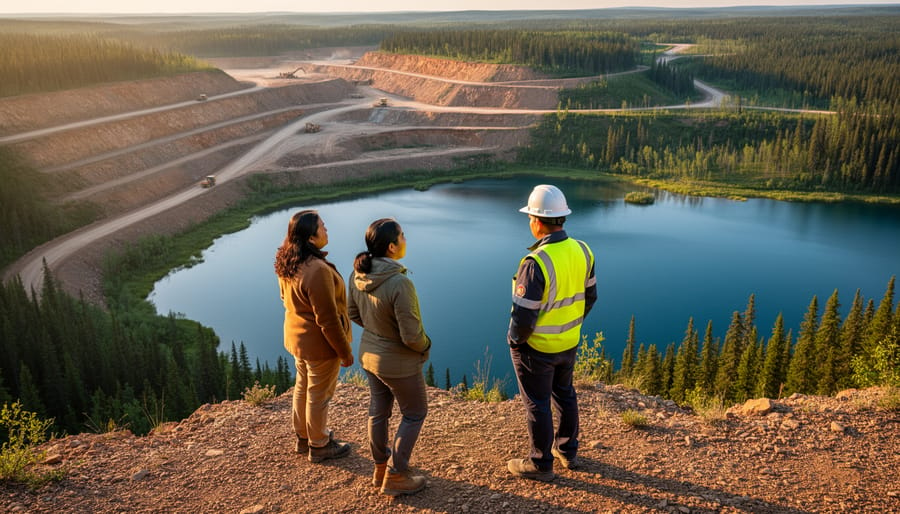
For centuries, mining and Indigenous communities in Canada have existed in a relationship marked by profound tension—one characterized by broken promises, environmental degradation, and the erosion of traditional ways of life. Yet a transformation is underway. Across the Canadian landscape, a new model is emerging where Indigenous nations are not merely consulted about resource extraction on their territories, but are becoming decision-makers, equity partners, and stewards who shape how mining proceeds.
This shift represents more than corporate social responsibility or regulatory compliance. It reflects a fundamental reimagining of what sustainable resource development means when Indigenous rights, knowledge, and governance are placed at the center rather than the periphery. Today’s mining communities—whether established towns near active operations or Indigenous nations navigating development proposals—face complex questions about economic opportunity, environmental protection, cultural preservation, and self-determination.
The stakes are significant. Mining operations can bring employment, infrastructure, and revenue sharing that supports community wellbeing and autonomy. They can also threaten water sources, wildlife populations, sacred sites, and the land-based practices that sustain Indigenous cultures. Understanding how these competing realities can coexist requires examining both historical harms and contemporary innovations.
This article explores the evolving role of mining in Indigenous communities, highlighting partnership models that prioritize free, prior, and informed consent, benefit-sharing agreements that extend beyond financial compensation, and environmental stewardship approaches that integrate traditional ecological knowledge with modern science. Through examining real examples and persistent challenges, we illuminate pathways toward mining practices that respect Indigenous sovereignty while contributing to economic reconciliation and sustainable development that benefits all Canadians.
The Historical Context: Understanding Past Harms
From Exclusion to Consultation
For much of Canada’s mining history, resource extraction proceeded on Indigenous territories with little regard for the people who had lived there for millennia. Mining companies operated under the assumption that Crown ownership of mineral rights superseded Indigenous interests, and development decisions happened in distant boardrooms and government offices without meaningful input from affected communities.
This approach began shifting in the 1970s and 1980s as Indigenous peoples gained stronger legal recognition of their rights. Landmark court decisions, including the Calder case in 1973 and subsequent rulings, established that Aboriginal title had never been extinguished in many parts of Canada. These decisions created legal obligations that would fundamentally reshape how resource development could proceed.
The duty to consult doctrine, reinforced through cases like Haida Nation and Taku River Tlingit in 2004, transformed the landscape entirely. Provincial and federal governments now have constitutional obligations to consult with Indigenous communities before approving projects that might affect their rights. For mining companies, this means consultation has evolved from a voluntary goodwill gesture to a legal requirement that can determine whether a project proceeds.
Today’s consultation frameworks vary across jurisdictions but generally include environmental assessments, impact benefit agreements, and ongoing dialogue throughout a mine’s lifecycle. While this represents substantial progress from complete exclusion, challenges remain. Many communities report consultation processes that feel rushed, one-sided, or designed to check boxes rather than genuinely incorporate Indigenous knowledge and concerns. The journey from exclusion to true partnership continues, requiring sustained commitment from all parties involved.
What Mining Communities Look Like Today
Geographic and Social Structures
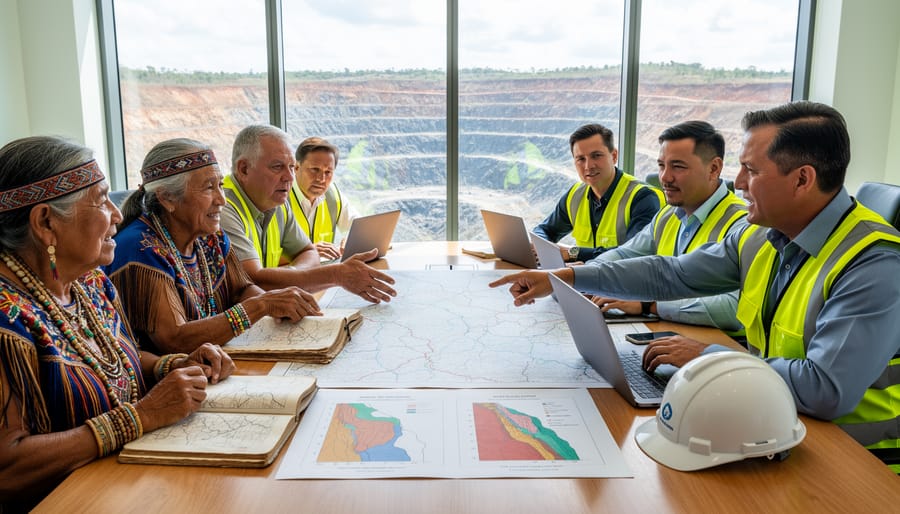
Mining communities in Indigenous territories often develop unique geographic and social structures shaped by both the mining operations and the existing Indigenous presence. These settlements typically emerge in remote areas where mineral deposits are located, creating hybrid communities that blend industrial infrastructure with Indigenous ways of life.
Physically, mining communities may include company-built housing, maintenance facilities, processing plants, and transportation networks like roads or airstrips connecting remote sites to larger centers. In fly-in-fly-out operations, temporary worker camps exist alongside permanent Indigenous communities, creating distinct spatial zones. Some operations are located near existing Indigenous settlements, while others establish entirely new communities that draw Indigenous and non-Indigenous workers.
Population dynamics in these communities can be complex and fluid. Permanent residents often include Indigenous community members who maintain traditional territories and seasonal land use patterns, while mining employees may rotate in and out on scheduled shifts. This creates fluctuating populations that challenge conventional community planning. Demographics tend to skew younger and male-dominated in mining-focused areas, though efforts toward diversification are increasing.
Community services in mining regions reflect this dual character. Essential infrastructure like schools, health clinics, and recreational facilities may be funded through impact benefit agreements between mining companies and Indigenous communities. These agreements increasingly recognize Indigenous governance structures and decision-making processes, ensuring that community development aligns with cultural values and long-term sustainability goals. Access to services can vary significantly, with some communities benefiting from enhanced infrastructure while others navigate gaps between traditional and industrial service models.
Economic Opportunities and Community Benefits
Beyond Jobs: Building Local Economies
Mining’s true economic potential extends far beyond the direct employment it creates. When structured thoughtfully, mining operations can catalyze broader economic development that continues benefiting communities long after extraction ends.
Local procurement and contracting represent one of the most significant opportunities. Many mining companies now prioritize hiring Indigenous-owned businesses for services ranging from catering and security to environmental monitoring and equipment maintenance. In northern Saskatchewan, for example, some operations source up to 70 percent of their goods and services from regional Indigenous businesses. This approach builds entrepreneurial capacity and keeps economic benefits circulating within communities rather than flowing to distant urban centers.
Skills training programs create pathways to diverse careers beyond traditional mining roles. Modern training initiatives often incorporate both technical skills and business development, preparing community members for opportunities in accounting, project management, environmental science, and equipment operation. Several Canadian mines have established partnerships with educational institutions to deliver accredited programs directly in remote communities, reducing barriers to participation.
Infrastructure investments frequently outlast mining operations themselves. Roads, telecommunications networks, power systems, and water treatment facilities built to support mines become permanent community assets. In some northern regions, mining-funded infrastructure has enabled communities to pursue tourism, aquaculture, and other economic diversification projects.
The key to maximizing these benefits lies in early and genuine collaboration between mining companies and Indigenous communities. Impact and Benefit Agreements that prioritize long-term economic capacity-building over short-term gains help ensure that communities develop resilient, diversified economies. When Indigenous communities have meaningful input in planning these initiatives, the results align more closely with their values and long-term visions for economic self-determination.
Revenue Sharing Models That Work
Financial arrangements between mining companies and Indigenous communities have evolved significantly, with Impact Benefit Agreements (IBAs) leading the way as powerful tools for equitable partnership. These legally binding contracts go beyond traditional royalty payments, creating comprehensive frameworks that deliver lasting economic benefits while respecting community values and governance.
The Raglan Mine agreement in northern Quebec stands as a pioneering example. Signed with Inuit communities in 1995, this IBA established employment targets, training programs, and business development opportunities alongside direct financial compensation. Over two decades later, Inuit employees comprise more than 20 percent of the workforce, and local Inuit-owned businesses provide essential services from catering to transportation.
In British Columbia, the Tahltan Nation’s agreements with multiple mining operations demonstrate how communities can negotiate from strength. Their IBAs include revenue sharing tied to production levels, guaranteed contracting opportunities for Tahltan businesses, and dedicated funds for cultural preservation and language revitalization programs. Critically, these agreements acknowledge Tahltan jurisdiction and incorporate their governance structures into decision-making processes.
The Diavik Diamond Mine’s agreement with five northern communities shows how transparency builds trust. Annual public reporting on employment statistics, contract awards, and environmental monitoring creates accountability while allowing communities to track benefits against commitments. These successful models share common elements: meaningful consultation from exploration stages, fair revenue distribution formulas, capacity-building investments, and recognition of Indigenous rights and title. When designed collaboratively, these arrangements transform mining from extraction to genuine partnership.
Indigenous Leadership and Self-Determination
Free, Prior, and Informed Consent in Practice
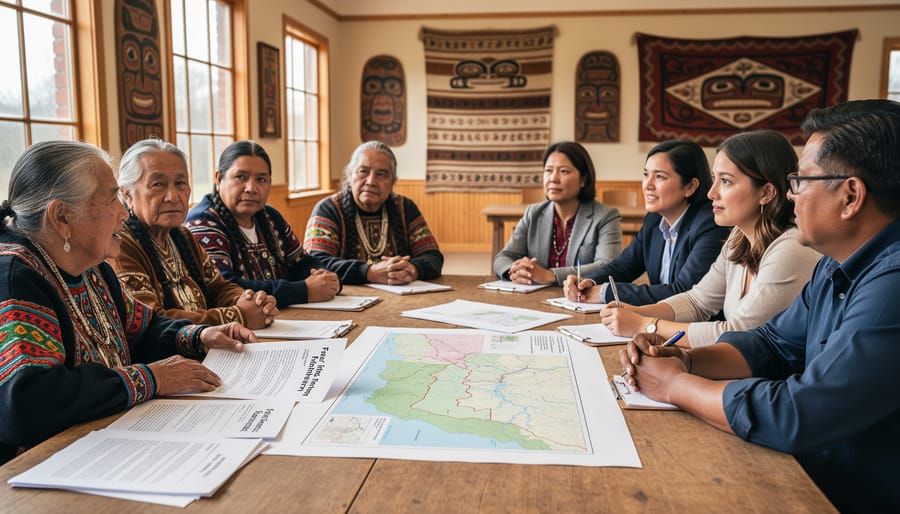
Free, Prior, and Informed Consent (FPIC) represents a fundamental shift in how mining projects engage with Indigenous communities in Canada. This principle, enshrined in the United Nations Declaration on the Rights of Indigenous Peoples, ensures that communities have the right to grant or withhold consent before projects proceed on their territories.
In practice, FPIC means companies must consult with communities before exploration begins, provide comprehensive information about potential impacts in accessible formats, and allow sufficient time for deliberation without pressure. Critically, communities retain the power to say no.
Several Canadian examples demonstrate FPIC in action. In 2017, the Peel Watershed Planning Commission in Yukon saw First Nations successfully protect 55,000 square kilometers from mining development after asserting their land rights. In northern Ontario, the Marten Falls First Nation exercised their consent authority by conducting an extensive two-year community consultation process before approving the Ring of Fire chromite project, ultimately negotiating equity stakes and environmental safeguards on their own terms.
The Tahltan Nation in British Columbia has developed a comprehensive mining policy that establishes clear consent requirements, including cultural heritage assessments and benefit-sharing agreements. Companies seeking to operate in Tahltan territory must demonstrate how projects align with community values and long-term sustainability goals.
While implementing FPIC presents challenges, particularly around timing and capacity, it fundamentally respects Indigenous jurisdiction and creates space for partnerships built on genuine mutual respect rather than imposed development.
Environmental Stewardship: Bridging Traditional Knowledge and Modern Science
Water Protection and Land Reclamation
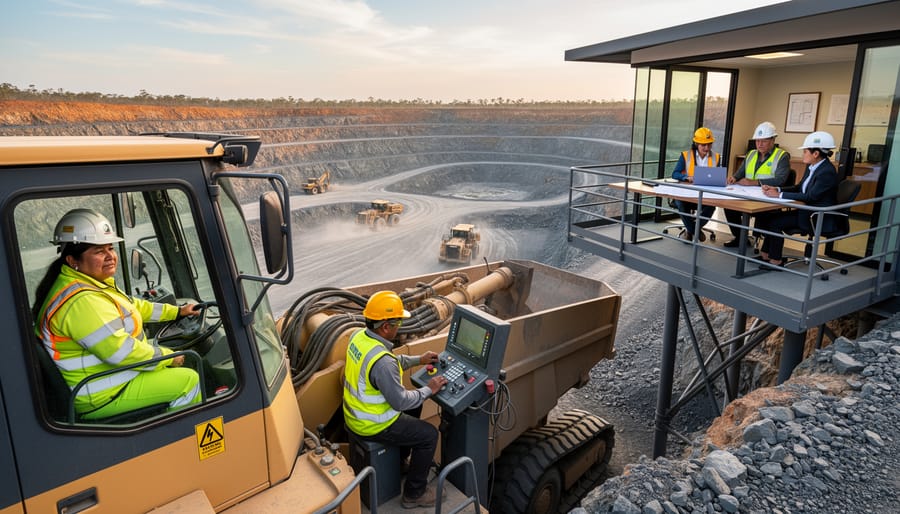
Protecting water sources and ensuring proper land reclamation have become central priorities in mining communities across Canada, with Indigenous nations often leading the charge in developing innovative approaches that honour both environmental science and traditional ecological knowledge.
The significance of water protection extends far beyond environmental regulation. For many Indigenous communities, water is sacred, representing life itself and carrying responsibilities that span generations. This worldview has proven invaluable in addressing mining-related water concerns. In Northern Ontario, the Mattagami First Nation partnered with mining operators to establish comprehensive water monitoring programs that combine Western scientific methods with traditional water observation practices passed down through Elders. Community members conduct regular assessments of fish populations, water taste, and seasonal changes that might indicate contamination, creating an early warning system that complements technical monitoring equipment.
Land reclamation represents another area where Indigenous perspectives have transformed industry practice. Rather than viewing reclamation as simply meeting minimum regulatory standards, many communities advocate for restoration that supports traditional land uses like hunting, gathering, and ceremony. The Dene Nation in the Northwest Territories has developed reclamation protocols that prioritize reestablishing native plant species used in traditional medicine and food harvesting, ensuring that restored landscapes remain culturally relevant for future generations.
Several mining companies have embraced these comprehensive approaches, recognizing that successful reclamation requires ongoing community involvement rather than one-time fixes. Progressive agreements now include provisions for multi-generational monitoring, with Indigenous communities maintaining oversight responsibilities long after mine closure. This ensures accountability while creating employment opportunities in environmental stewardship.
These collaborative efforts demonstrate that protecting ecosystems and supporting economic development need not be opposing goals. By centering Indigenous knowledge alongside scientific expertise, mining communities are pioneering sustainable practices that benefit everyone while honouring the deep connections between people and land.
The Challenges That Remain
Despite meaningful progress in recent decades, mining’s relationship with Indigenous communities continues to face significant obstacles that require honest acknowledgment and sustained effort to overcome.
Social disruptions remain a persistent concern. Mining projects often bring influxes of temporary workers into small, tight-knit communities, which can strain local infrastructure and services. Housing shortages, increased cost of living, and pressure on healthcare facilities create real hardships for existing residents. The rapid pace of development can also introduce substance abuse issues and social fragmentation, challenging the cultural fabric that holds communities together.
The tension between economic development and environmental protection presents ongoing dilemmas. While mining generates employment and revenue, the environmental footprint—including habitat disruption, water contamination risks, and impacts on traditional lands—creates anxiety about long-term consequences. Communities face difficult questions: How much environmental risk is acceptable for economic benefit? What happens when the mine closes and the jobs disappear, but environmental legacies remain?
Jurisdictional complexities add another layer of difficulty. Mining projects often involve negotiations between Indigenous nations, provincial governments, federal authorities, and private companies—each with different legal obligations, priorities, and timelines. Treaty rights, constitutional protections, and provincial resource management laws don’t always align smoothly, creating uncertainty that can delay projects and strain relationships.
Cultural impacts extend beyond immediate physical disruption. Mining activities on traditional territories can affect spiritual practices, interrupt intergenerational knowledge transfer about the land, and limit access to hunting, fishing, and gathering areas that sustain both livelihoods and cultural identity. These losses aren’t easily quantified in economic assessments but profoundly affect community wellbeing.
The “boom and bust” cycle of resource extraction also creates vulnerability. Communities that become economically dependent on single mining operations face uncertain futures when ore bodies are depleted or commodity prices crash. Building economic resilience while maintaining cultural continuity requires more than short-term employment—it demands thoughtful planning for multi-generational sustainability.
These challenges aren’t insurmountable, but addressing them requires patience, respect, and genuine commitment to partnership models that prioritize Indigenous self-determination alongside responsible resource development.
Building Better Partnerships: What Success Looks Like
Across Canada, a new generation of mining-Indigenous partnerships is redefining what success looks like, moving beyond simple consultation toward genuine collaboration and shared prosperity.
One compelling example comes from the Voisey’s Bay nickel project in Labrador, where Vale and the Innu Nation, along with the Nunatsiavut Government, established Impact and Benefit Agreements that go far beyond standard practice. These agreements prioritized Indigenous employment, with targets ensuring significant representation of Inuit and Innu workers at all levels of operation. The partnerships also established education and training programs that begin in local schools, creating pathways for young people to pursue mining careers while remaining connected to their communities. Importantly, the agreements include environmental monitoring roles for Indigenous knowledge keepers, integrating traditional ecological understanding with scientific assessment.
In Northern Ontario, the relationship between Glencore’s Raglan Mine and the Inuit communities of Nunavik demonstrates how long-term commitment builds trust. Since operations began in 1997, the mine has maintained a rotational employment model that allows Inuit workers to balance work schedules with traditional harvesting activities. The company supports cultural practices by providing flexibility for employees to participate in seasonal hunting and fishing, recognizing that cultural continuity strengthens rather than conflicts with workforce stability.
What distinguishes successful partnerships is their foundation in mutual respect and transparency. The Ring of Fire chromite development in Northern Ontario, still in planning stages, has involved unprecedented early engagement with Matawa First Nations, with discussions beginning years before permits were sought. This approach allows communities to shape development from the outset rather than responding to predetermined plans.
Successful partnerships also recognize Indigenous communities as economic partners, not just stakeholders. Revenue-sharing arrangements, equity stakes, and contracting opportunities for Indigenous businesses create economic benefits that extend beyond individual employment. The Diavik Diamond Mine in the Northwest Territories, for example, has generated over $5 billion in contracts with Indigenous businesses since opening.
These examples share common elements: early and ongoing engagement, respect for Indigenous governance, integration of traditional knowledge, flexibility that honors cultural practices, and genuine economic participation. They demonstrate that when mining companies approach relationships with humility and commitment to long-term collaboration, both communities and industry can thrive together, creating models of sustainable development that benefit everyone involved.
The path forward for mining in Indigenous territories requires fundamental recognition that resource development and Indigenous rights are not mutually exclusive. As we’ve explored throughout this discussion, meaningful partnerships grounded in respect, consent, and shared decision-making can create outcomes that benefit both Indigenous communities and Canada’s resource economy. The stories of communities like Musselwhite Mine and the Ekati Diamond Mine demonstrate that when companies genuinely engage with Indigenous peoples as partners rather than obstacles, mining projects can contribute to local employment, cultural preservation, and community infrastructure while responsibly accessing valuable resources.
However, success depends on continued commitment from all parties. Mining companies must move beyond minimum consultation requirements to embrace true partnership models that recognize Indigenous sovereignty and knowledge systems. Governments need to ensure regulatory frameworks protect Indigenous rights while supporting sustainable development. Most importantly, Indigenous communities must retain the power to say yes or no to projects on their territories, with their decisions respected regardless of the outcome.
For those of us observing and participating in Canada’s resource sector, the responsibility is clear: support models that prioritize partnership over extraction, respect over exploitation. Whether you’re a policymaker, industry professional, investor, or concerned citizen, advocate for approaches that honor Indigenous rights and demonstrate that economic development can align with environmental stewardship and social justice. The future of mining in Canada depends on our collective willingness to do better, together.