Carbon capture is a process that traps carbon dioxide emissions from industrial sources or directly from the air, preventing them from entering the atmosphere and contributing to climate change. The captured CO2 is then transported and stored underground in geological formations, or used in industrial applications ranging from enhanced oil recovery to the production of building materials.
This technology matters because it offers one of the few viable pathways to reduce emissions from heavy industry and power generation while these sectors transition toward cleaner energy sources. For Saskatchewan, carbon capture represents both environmental progress and economic opportunity. The province operates the world’s first commercial-scale carbon capture facility on a coal-fired power plant at Boundary Dam, positioning Saskatchewan as a testing ground where theory meets industrial reality.
Understanding how carbon capture works requires looking beyond the headlines about costs and controversy. The technology involves three distinct stages: capturing CO2 from emission sources, compressing and transporting it through pipelines, and injecting it deep underground into porous rock formations where it remains isolated from the atmosphere for thousands of years. Each stage presents its own engineering challenges and opportunities for innovation.
This article explains the fundamentals of carbon capture technology, examines the different approaches currently in use, and explores why Saskatchewan has become central to the conversation about reducing industrial emissions in Canada. We’ll look at real-world applications, economic considerations, and the perspectives of Indigenous communities whose territories host both the infrastructure and the geological storage sites. Whether you’re evaluating the technology’s potential for climate action or considering its implications for resource development, understanding the mechanics and trade-offs of carbon capture provides essential context for informed decisions about our energy future.
What Is Carbon Capture?
Carbon capture is a set of technologies designed to trap carbon dioxide (CO2) at the point where it’s produced, before it escapes into the atmosphere. Rather than allowing emissions from power plants, factories, or industrial facilities to rise from smokestacks and contribute to climate change, carbon capture systems intercept CO2 at the source, separating it from other gases so it can be transported and permanently stored underground or converted into useful products.
The technology addresses a fundamental challenge: while the world transitions toward renewable energy, certain industries will continue producing CO2 for years to come. Saskatchewan’s coal-fired power plants, cement factories, steel mills, and resource extraction operations all generate substantial emissions as inherent byproducts of their processes. Carbon capture offers a practical way to significantly reduce those emissions without shutting down facilities that remain essential to the economy and daily life.
- Carbon Capture
- The process of isolating and collecting CO2 from industrial emission sources before it enters the atmosphere, typically using chemical solvents or physical separation methods.
- Carbon Storage (CCS)
- The practice of injecting captured CO2 into deep underground geological formations where it remains permanently trapped, also known as carbon capture and storage.
- Sequestration
- The long-term containment of CO2 in geological formations, preventing it from returning to the atmosphere for thousands of years.
- Point-Source Emissions
- CO2 released from a single, identifiable location such as a power plant smokestack or industrial facility, making it easier to capture than diffuse emissions from vehicles or agriculture.
For heavy-emitting industries, carbon capture represents more than an environmental tool, it’s becoming a pathway to continued operation in a carbon-constrained world. As governments set stricter emission reduction targets and carbon pricing increases, facilities that can prove they’re capturing and storing their CO2 gain both regulatory approval and social license. Saskatchewan recognized this reality early, positioning the province as a testing ground where carbon capture technology moved from theory to commercial-scale reality.
How Carbon Capture Works: The Process Explained
Capture: Separating CO2 from Emissions
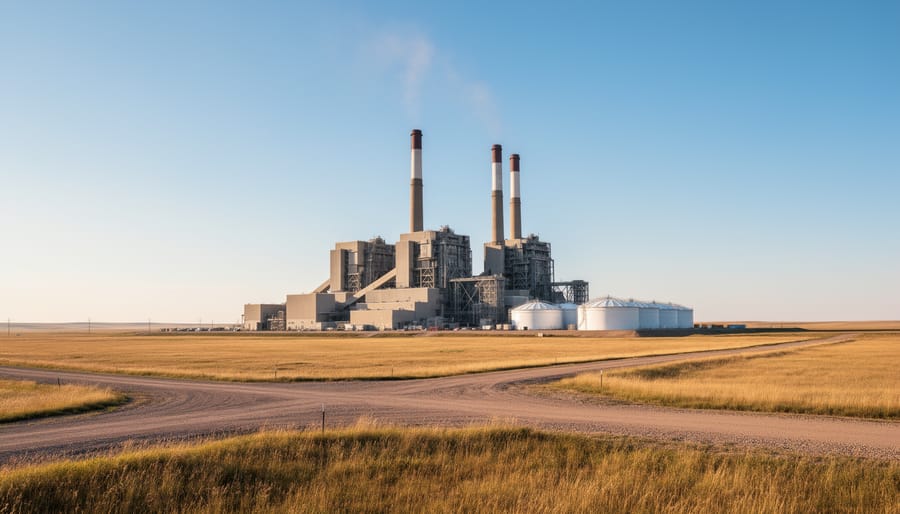
At coal-fired power plants like Boundary Dam, flue gas exits the boiler as a hot mixture containing roughly 12-15% carbon dioxide, along with nitrogen, water vapor, and trace gases. The separation challenge lies in selectively pulling CO2 from this dilute stream before it reaches the smokestack.
Post-combustion capture uses a chemical solvent, typically an amine solution, that acts like a molecular sponge. The flue gas enters an absorption tower where it bubbles upward through cascading liquid amine. CO2 molecules bond with the amine while nitrogen and other gases pass through untouched. The CO2-rich solvent then flows to a regeneration unit where heat breaks those bonds, releasing pure CO2 gas and restoring the amine for reuse.
This continuous cycle captures about 90% of CO2 from treated flue gas. Boundary Dam processes roughly 1 million tonnes annually using this method. The approach works well for existing power plants since it fits as an add-on to current infrastructure, though it demands significant energy, the regeneration heat comes from steam that would otherwise generate electricity, reducing plant output by 20-25%.
Transportation and Compression
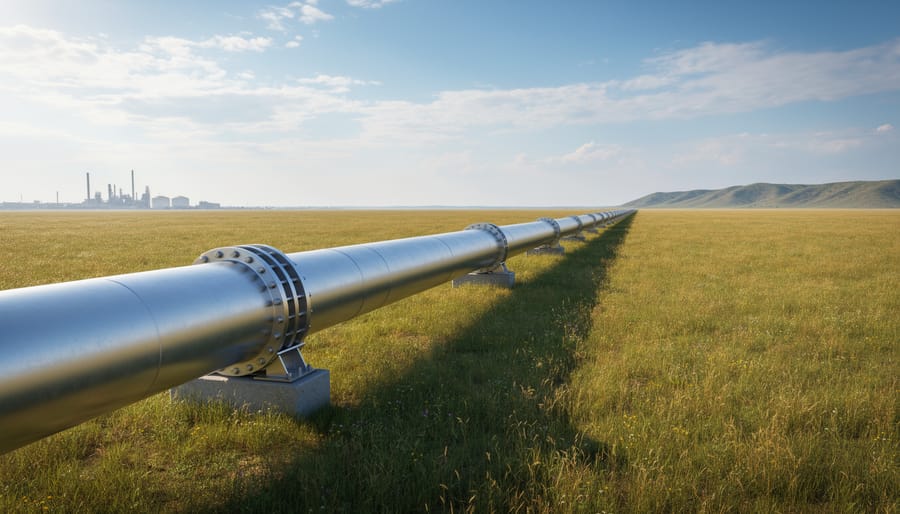
Once CO2 is separated from other emission gases, it can’t simply be moved in its gaseous state, the volume would be impractical and inefficient. Instead, facilities compress the captured carbon dioxide to roughly 100 times atmospheric pressure, transforming it into what’s called a “supercritical fluid.” This dense, liquid-like state reduces the volume dramatically, making transport feasible.
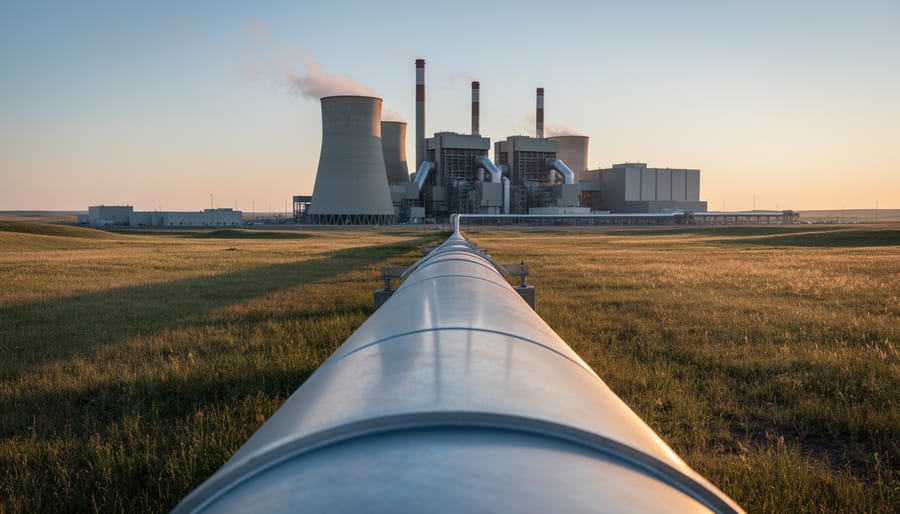
In Saskatchewan, pipelines carry this compressed CO2 from capture facilities like Boundary Dam to either storage sites or enhanced oil recovery operations. The pipeline infrastructure resembles existing natural gas networks but requires specific materials and monitoring systems to handle the pressurized CO2 safely. Compression stations along the route maintain pressure, ensuring smooth flow across distances that can span dozens of kilometres.
Storage: Deep Geological Sequestration
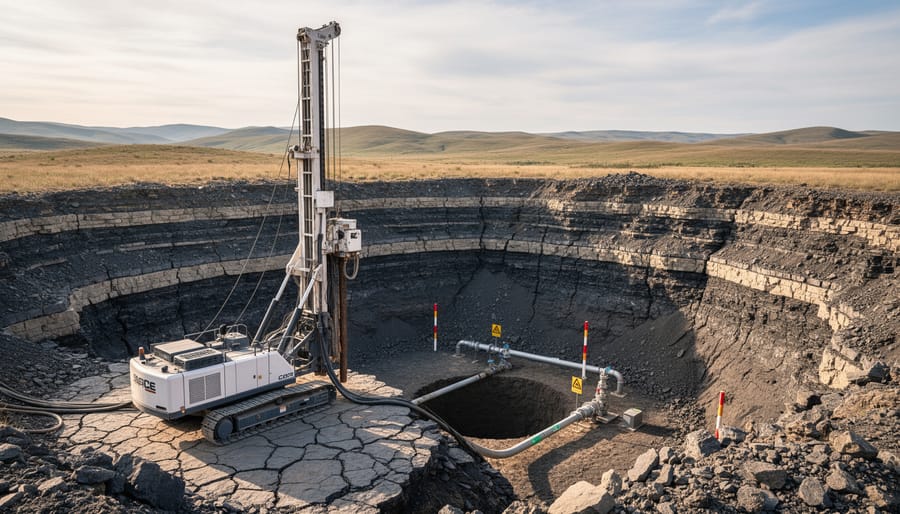
Once captured and transported, CO2 must be permanently removed from the atmosphere, and that’s where geology comes in. Deep geological sequestration involves injecting compressed CO2 into porous rock layers thousands of metres underground, typically 800 to 3,000 metres below the surface. At these depths, pressure and temperature conditions keep the CO2 in a dense, liquid-like state that won’t easily migrate back upward.
Saskatchewan’s geology is particularly well-suited for this purpose. The province’s sedimentary basins contain extensive layers of porous sandstone capped by impermeable rock formations, natural traps that have held oil, gas, and saltwater for millions of years. When CO2 is injected into these deep geological formations it fills the tiny spaces within the rock matrix, much like water fills a sponge. The overlying caprock, dense shale or salt layers, acts as a seal, preventing upward escape.
Injection sites are carefully selected based on rock porosity, permeability, and geological stability. Engineers drill injection wells similar to oil wells, then pump CO2 downward under controlled pressure. Over time, some of the injected CO2 dissolves into underground brine or reacts with minerals to form solid carbonates, further securing it in place. Saskatchewan’s Aquistore project has demonstrated that this storage method can safely contain CO2 for geological timescales, essentially locking it away permanently.
Monitoring and Verification
Saskatchewan’s carbon capture facilities employ rigorous monitoring systems to confirm CO2 stays underground. Sensors track pressure and temperature changes in storage formations, detecting any shifts that might indicate movement. Seismic monitoring, similar to earthquake detection, maps the CO2 plume’s extent and ensures it remains within target zones.
Surface measurements check for leaks, while regular well integrity tests verify injection sites maintain their seal. The Aquistore project has demonstrated that geological monitoring can detect changes as small as one metre in CO2 migration patterns.
Facilities submit detailed reports to regulators, documenting injection volumes, storage performance, and safety metrics. This continuous verification builds confidence that captured carbon won’t resurface, providing accountability for Saskatchewan’s climate commitments while informing future CCS projects worldwide.
Types of Carbon Capture Technologies
Post-Combustion Capture
Post-combustion capture is the most widely deployed carbon capture method and the technology powering Saskatchewan’s Boundary Dam facility. This approach captures CO2 from flue gases after fossil fuels have been burned in a conventional power plant or industrial boiler, essentially adding carbon capture as a “bolt-on” technology to existing facilities.
The process works by passing exhaust gases through a chemical solvent, typically an amine solution, which bonds with CO2 molecules while allowing other gases like nitrogen and oxygen to pass through. The CO2-rich solvent is then heated in a separate chamber, releasing the captured carbon dioxide in concentrated form. The regenerated solvent returns to capture more CO2, creating a continuous cycle.
At Boundary Dam, this system treats exhaust from one 110-megawatt coal-fired unit, capturing approximately 90 percent of its CO2 emissions, roughly one million tonnes annually when operating at design capacity. The facility’s real-world performance has provided valuable lessons about maintenance requirements, solvent degradation, and the operational adjustments needed to keep capture rates high while maintaining reliable power generation.
Post-combustion’s main advantage is retrofitability: it can be added to existing coal and natural gas plants without redesigning the entire facility, making it Saskatchewan’s practical choice for reducing emissions from established infrastructure.
Pre-Combustion Capture
Pre-combustion capture takes a different approach by removing CO2 before fuel is burned. This method starts with partially oxidizing the fuel, typically coal or natural gas, to create a mixture called synthesis gas, or syngas. The syngas contains hydrogen and carbon monoxide, which then reacts with steam in a shift converter to produce hydrogen and CO2.
Because the CO2 is already concentrated at this stage, separating it becomes more efficient than filtering it from diluted exhaust gases. The remaining hydrogen burns cleanly or powers industrial processes, producing only water vapour as a byproduct.
This technology shows particular promise in gasification facilities, where coal or biomass is converted into syngas for power generation or chemical production. The integrated gasification combined cycle (IGCC) plants use this approach, though Saskatchewan currently has no commercial-scale IGCC facilities.
Pre-combustion capture offers higher efficiency and lower energy penalties compared to post-combustion methods, but requires purpose-built facilities rather than retrofitting existing plants. For Saskatchewan’s industrial sector, this technology could support future hydrogen production or next-generation power plants as the province diversifies its energy mix.
Oxy-Fuel Combustion
Oxy-fuel combustion takes a different approach by burning fuel in nearly pure oxygen instead of regular air. This creates a flue gas that’s primarily CO2 and water vapour, much simpler to capture than the mixed gases from conventional combustion.
The process removes nitrogen from the combustion equation, which typically makes up 78% of air and dilutes the CO2 produced. By using oxygen-enriched or pure oxygen environments, facilities generate a concentrated CO2 stream that requires less processing and fewer chemical solvents to purify. After combustion, operators cool the gas to condense water vapour, leaving behind high-purity CO2 ready for compression and storage.
While not yet deployed commercially in Saskatchewan, oxy-fuel combustion holds promise for the province’s industrial operations. The technology could suit cement manufacturing, steel production, and certain mining processes where high-temperature combustion is essential. Saskatchewan’s existing pipeline infrastructure and geological storage capacity position it well to adopt this approach as the technology matures.
The main barrier remains the energy required to produce pure oxygen at industrial scale, which affects overall efficiency and operating costs. Research continues into more efficient oxygen production methods that could make oxy-fuel combustion economically viable for Saskatchewan’s heavy industries.
Carbon Capture in Saskatchewan: Leading the Way
Boundary Dam CCS Facility
When SaskPower’s Boundary Dam 3 facility came online in October 2014, it marked a turning point for carbon capture technology. This world’s first post-combustion carbon capture system at a commercial coal-fired power plant proved the technology could work at scale, not just in laboratory settings.
Located near Estevan, Saskatchewan, the facility captures CO2 from a 110-megawatt coal unit using amine-based absorption technology. At full operation, it’s designed to capture up to one million tonnes of CO2 annually, roughly equivalent to taking 250,000 cars off the road each year. The captured carbon follows two paths: about half gets transported to nearby oil fields for enhanced recovery, while the remainder goes to deep geological storage through the Aquistore research project.
The facility’s first decade hasn’t been without challenges. Technical issues with the amine system, equipment reliability, and the learning curve of operating pioneering technology meant actual capture rates initially fell short of design capacity. Early years saw the system capturing 40-60% of targeted volumes as operators refined processes and upgraded equipment. But these real-world lessons proved invaluable. Engineers worldwide now study Boundary Dam’s operational data to improve next-generation systems, turning Saskatchewan’s coal country into an unlikely classroom for global climate technology.
The Aquistore Project
Located near Estevan alongside the Boundary Dam facility, Aquistore serves as the research counterpart to Saskatchewan’s commercial carbon capture operations. While Boundary Dam captures and stores CO2 primarily for enhanced oil recovery, the Aquistore monitoring project focuses exclusively on deep saline aquifer storage, injecting CO2 into brine-filled rock formations more than 3,000 metres underground with no extraction purpose.
This distinction matters. Aquistore provides the scientific baseline for understanding how CO2 behaves when stored permanently in geological formations, without the variables introduced by oil recovery operations. Researchers monitor pressure changes, CO2 migration patterns, and chemical interactions between the injected gas and surrounding rock. The project uses an array of sensors and periodic sampling to track the stored carbon’s behaviour over years, generating data that informs safety protocols and regulatory frameworks not just in Saskatchewan but globally.
Since operations began in 2015, Aquistore has safely stored thousands of tonnes of CO2 while demonstrating that deep saline formations, abundant across the Canadian prairies, can reliably contain carbon for geological timescales. The project’s transparent monitoring approach addresses public concerns about storage permanence and helps establish the technical foundation for future large-scale CCS deployment.
Enhanced Oil Recovery Connection
Captured CO2 from Boundary Dam doesn’t just get stored, it’s pumped into mature oil fields across southeastern Saskatchewan to boost production. This process, called enhanced oil recovery (EOR), involves injecting CO2 into depleted reservoirs where it mixes with remaining oil, reducing viscosity and pushing additional crude to the surface. Fields that have been producing for decades can yield 10-15% more oil through this method.
The economics work in Saskatchewan’s favour. Oil producers pay for the captured CO2, offsetting some of Boundary Dam’s capture costs while extending the productive life of existing wells. Since 2014, millions of tonnes of CO2 have been injected into Weyburn and other fields, where it remains permanently trapped in the rock formations alongside the extracted oil.
This dual-purpose approach turns carbon capture into a practical business case rather than a pure emissions cost. The CO2 that would have entered the atmosphere instead generates revenue while staying underground. It’s a pragmatic solution that fits Saskatchewan’s resource economy, though critics note it still supports fossil fuel production rather than replacing it entirely.
Applications and Uses of Carbon Capture
Industrial Applications in Saskatchewan
Saskatchewan’s industrial sector presents diverse opportunities for carbon capture deployment beyond coal-fired power generation. The province’s potash industry, responsible for roughly 40% of global potash production, generates significant CO2 emissions during mining and processing operations. Several potash facilities are exploring capture technologies to reduce their carbon footprint while maintaining production levels essential to global food security.
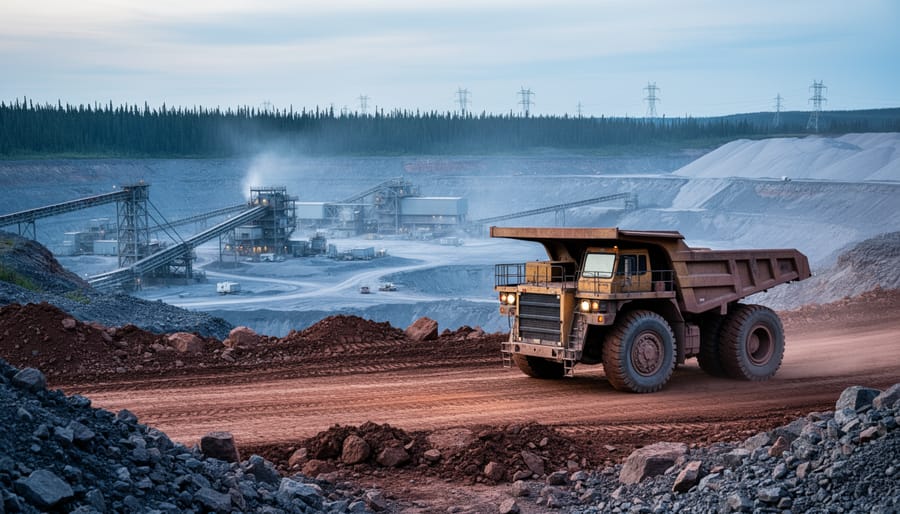
The mining sector, particularly as Saskatchewan develops its critical mineral resources, represents another frontier for carbon capture applications. As demand for battery materials intensifies with vehicle electrification, nickel mining and refining operations, which typically involve energy-intensive smelting and processing, could integrate capture systems to produce low-carbon metals. This positions Saskatchewan to supply environmentally responsible materials for the clean energy transition, addressing growing market preference for metals with verified sustainability credentials.
Saskatchewan’s natural gas processing facilities and oil refineries are also examining carbon capture integration. These industries already separate CO2 as part of their operations, making capture technically simpler than retrofitting other industrial processes. The province’s extensive pipeline infrastructure and suitable geological formations create advantages for these facilities to implement capture systems.
Looking ahead, emerging hydrogen production facilities in Saskatchewan may pair carbon capture with natural gas reformation processes, creating “blue hydrogen” as a lower-emission energy carrier. This approach leverages existing natural gas resources while substantially reducing associated emissions, potentially establishing Saskatchewan as a hydrogen supplier for domestic and export markets.
Carbon Utilization Opportunities
Captured CO2 doesn’t have to stay buried underground. Scientists and entrepreneurs are developing technologies that turn it into useful products, creating economic value while keeping carbon out of the atmosphere.
In construction, captured CO2 can be mineralized into concrete and building blocks. Companies are injecting CO2 into concrete during curing, where it chemically bonds and becomes permanent. This approach is particularly relevant for Saskatchewan’s growing infrastructure needs as the province expands.
Carbon-based fuels represent another frontier. Using renewable energy, CO2 can be converted into synthetic fuels for aviation and shipping, sectors where battery power isn’t practical. Several Canadian pilots are testing these processes, though they remain costly compared to conventional fuels.
Chemical manufacturers are exploring CO2 as a raw material for plastics, polymers, and industrial chemicals. One Saskatchewan potash producer is investigating CO2-derived chemicals for its operations, potentially creating a closed-loop system.
Consumer products like carbon-negative vodka and carbonated beverages already use captured CO2 commercially. While these applications can’t absorb industrial-scale emissions alone, they demonstrate market viability and public acceptance of carbon utilization.
Most experts view utilization as complementary to storage rather than a replacement, but it adds economic incentive to capture programs.

Benefits and Challenges of Carbon Capture
Economic Considerations
Carbon capture technology demands significant upfront investment. The Boundary Dam facility cost approximately $1.5 billion to retrofit, demonstrating the financial scale required for commercial carbon capture projects. Operating costs add another layer: capturing one tonne of CO2 typically costs $60 to $100, making the technology economically challenging without policy support.
Saskatchewan’s carbon capture projects rely heavily on government funding and carbon pricing mechanisms. Federal tax credits, provincial grants, and revenue from selling captured CO2 for enhanced oil recovery help offset expenses. The federal government’s expanded Investment Tax Credit, offering up to 60% back on eligible CCS projects as of 2024, signals growing policy commitment.
Economic viability hinges on three factors: carbon price levels, technological improvements that reduce costs, and revenue opportunities from CO2 utilization. As carbon prices rise and capture efficiency improves, the business case strengthens. For Saskatchewan’s resource-dependent economy, carbon capture offers a pathway to maintain industrial activity while meeting emission targets, preserving jobs and government revenues during the transition to lower-carbon energy systems.
Environmental and Social Perspectives
Carbon capture sits at the intersection of climate urgency and economic reality. While it reduces emissions from existing industrial infrastructure, critics argue it perpetuates fossil fuel dependence when resources could accelerate renewable energy development. The technology works best as one tool among many, bridging the gap while cleaner alternatives scale up rather than replacing the transition itself.
Indigenous communities in Saskatchewan bring essential perspectives to carbon capture projects. Storage sites and pipeline routes cross traditional territories, raising questions about long-term land stewardship and treaty rights. The Aquistore project involved consultation with local First Nations, but many communities emphasize the need for genuine partnership from project conception, not just approval stages. Their knowledge of geological formations and multi-generational thinking about land use offers valuable guidance for century-long storage commitments.
The social license for carbon capture depends on transparency about what it can and can’t achieve. It addresses emissions from hard-to-decarbonize industries like cement and steel, but shouldn’t delay the renewable transition Saskatchewan needs. Honest conversations about trade-offs, timelines, and who benefits create stronger foundations than treating any single technology as a complete solution.
The Future of Carbon Capture in Saskatchewan and Beyond
Saskatchewan sits at a crossroads where traditional energy expertise meets climate innovation, positioning the province to play a continuing role in carbon capture advancement as Canada charts its path to net-zero emissions by 2050.
The technology itself keeps evolving. Direct air capture, removing CO2 directly from the atmosphere rather than from industrial sources, remains expensive today but shows promise for future deployment in regions like Saskatchewan with available geological storage. Researchers are developing new solvents and materials that capture carbon more efficiently and at lower cost, potentially making the technology viable for smaller industrial facilities beyond large power plants. Saskatchewan’s existing infrastructure and geological knowledge create opportunities to test these innovations in real-world conditions.
Policy frameworks will shape carbon capture’s trajectory significantly. Canada’s federal carbon pricing system and potential enhancements to investment tax credits for CCS projects affect the economic equation for new facilities. Saskatchewan has advocated for policies that recognize carbon capture as part of a diversified climate strategy rather than positioning it against renewable energy, an approach that reflects the province’s resource economy and the reality that some industrial processes will require carbon management regardless of energy sources used.
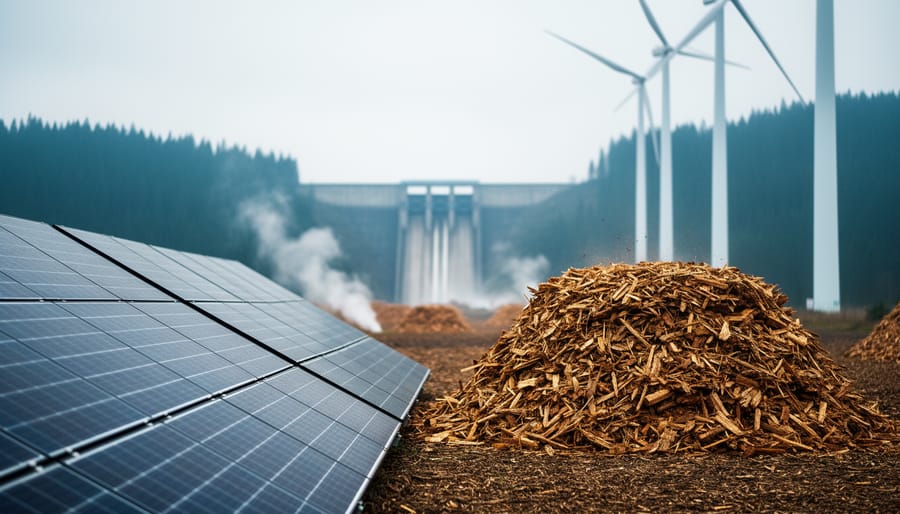
Integration represents the most practical path forward. Saskatchewan’s electricity grid increasingly combines wind and solar generation with traditional sources equipped with carbon capture, creating a more flexible system. As the province’s mining sector expands to meet demand for battery minerals like nickel, carbon capture could help manage emissions from ore processing and smelting operations that can’t easily electrify.
Indigenous communities continue bringing essential perspectives to these developments. Meaningful consultation on storage site selection, benefit-sharing agreements, and integration of traditional land knowledge with geological science will determine whether carbon capture projects gain social license and contribute to reconciliation goals.
The future likely holds a portfolio approach: renewable energy scaling up where practical, carbon capture managing emissions from essential industries, and continued research bridging both strategies toward genuinely sustainable resource development.
Frequently Asked Questions
Is captured CO2 really permanently stored underground?
Yes, when properly injected into deep geological formations, CO2 remains trapped through multiple mechanisms: physical trapping under impermeable rock layers, dissolution into saline water, and mineralization as it reacts with rock over time. Saskatchewan’s Aquistore project has demonstrated through extensive monitoring that CO2 injected into deep saline aquifers at depths exceeding 3,000 meters stays securely contained. The geological formations used for storage have held oil, gas, and water for millions of years, providing natural evidence of their long-term sealing capacity.
What are the costs of carbon capture technology?
Carbon capture remains expensive, with costs varying significantly based on the emission source, technology used, and scale of operations. Boundary Dam’s initial capital investment exceeded $1.4 billion, and operational costs include energy consumption that reduces plant efficiency by 20-30%. Government support through carbon pricing mechanisms and investment programs has been necessary to make projects economically viable, though costs are expected to decrease as technology matures and deployment scales up.
How safe is carbon capture and storage for nearby communities?
CCS technology has proven safe when properly designed and monitored, with comprehensive safety protocols in place at Saskatchewan facilities. Injection sites are selected based on rigorous geological assessments, and continuous monitoring systems track pressure, temperature, and potential seismic activity. The greatest safety consideration involves pipeline transportation of compressed CO2, which requires emergency response planning similar to natural gas pipelines.
How much CO2 has Saskatchewan actually captured?
Since Boundary Dam’s 2014 launch, the facility has captured over 5 million tonnes of CO2, though actual capture rates have fallen short of the original 1 million tonnes per year target due to technical challenges and maintenance requirements. The project has provided invaluable operational data for future CCS developments worldwide.
Can carbon capture work alongside renewable energy?
Yes, carbon capture and renewable energy serve complementary roles in reducing emissions. While renewables replace fossil fuel generation, CCS addresses emissions from hard-to-decarbonize industries like cement, steel, and petrochemicals where alternatives don’t yet exist at scale.
Does carbon capture work for methane and other greenhouse gases?
Current CCS technology focuses specifically on CO2 capture, though some industrial processes can capture other gases. Methane from sources like agriculture and oil and gas operations requires different mitigation strategies, including leak detection and direct emission reduction rather than post-production capture.
These questions reflect the practical concerns of Saskatchewan residents and industry stakeholders as they evaluate carbon capture’s role in the province’s energy transition. Understanding both the proven capabilities and current limitations helps communities make informed decisions about supporting CCS projects while pursuing complementary climate solutions.
Types or components
Carbon capture systems consist of several interconnected components working together to capture, process, and manage CO2 emissions. The capture unit sits at the emission source, typically a power plant or industrial facility, where chemical solvents or other separation technologies isolate CO2 from flue gases. This unit includes absorption towers, regeneration equipment, and solvent recovery systems.
The compression facility takes captured CO2 and pressurizes it to a dense, liquid-like state for efficient transport and storage. Compression requires substantial energy input and cooling systems to manage heat generated during the process.
Transportation infrastructure moves compressed CO2 from capture sites to storage locations or utilization facilities. In Saskatchewan, this means pipelines connecting Boundary Dam to oil fields and geological storage sites, built to handle the unique properties of supercritical CO2.
Injection wells and storage reservoirs form the final component, where CO2 is pumped into porous rock formations thousands of meters underground. These sites require cap rock layers to prevent upward migration and careful geological characterization to ensure safe, permanent containment.
Monitoring systems track CO2 behavior throughout the entire process, using sensors, pressure gauges, and geological surveys to verify capture rates and storage integrity.
Carbon capture stands at a crossroads in Saskatchewan’s energy evolution, neither a silver bullet nor a distraction, but a practical bridge technology addressing real emissions today while renewable infrastructure scales up. The province’s decade-plus experience with facilities like Boundary Dam demonstrates that large-scale carbon capture works, though economic viability still requires policy support and continued innovation to reduce costs.
Saskatchewan’s leadership position creates both opportunity and responsibility. The technical knowledge gained here informs global efforts, yet success depends on approaches that honor diverse perspectives. Indigenous communities bring generations of land stewardship wisdom that strengthens project planning and monitoring. Resource workers provide operational expertise essential for implementation. Environmental advocates push necessary questions about long-term effectiveness and investment priorities.
The most productive path forward integrates these viewpoints rather than treating them as competing interests. Carbon capture serves best when paired with efficiency improvements, renewable energy expansion, and honest assessment of which emissions sources truly need this technology versus which can transition to cleaner alternatives. As electrification grows and battery materials like nickel become more critical, Saskatchewan’s resource sector faces choices about where carbon capture fits alongside other decarbonization strategies.
The conversation continues beyond any single article or project. Informed dialogue requires understanding the technology itself, its real capabilities and limitations, and the economic and social contexts shaping deployment decisions. Saskatchewan’s experience offers valuable lessons for communities worldwide navigating similar transitions between fossil dependence and renewable futures.