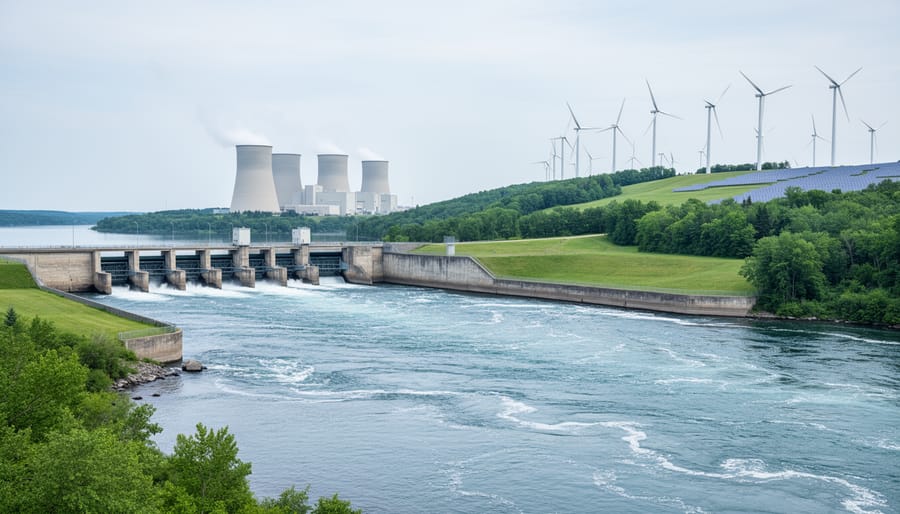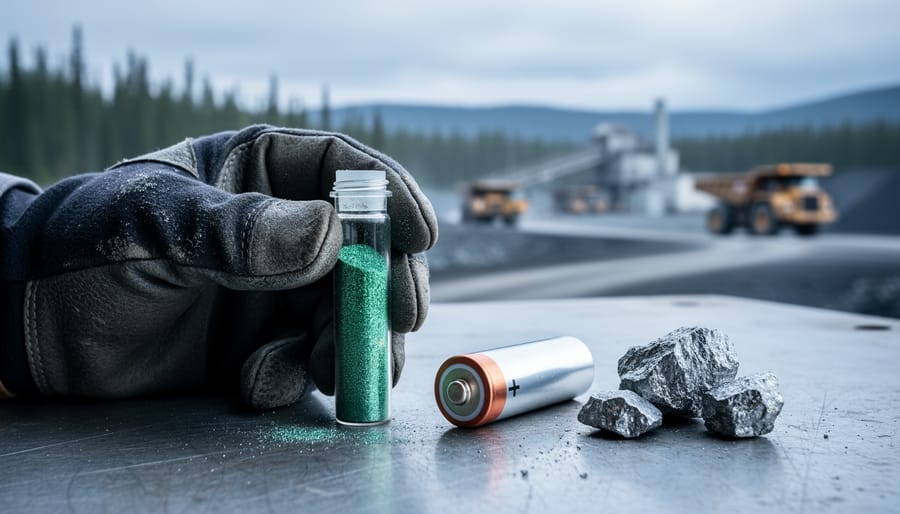
Critical minerals are elements and compounds essential to modern economies and national security that face supply chain vulnerabilities or geopolitical risks. These non-renewable resources power everything from smartphones to electric vehicles, yet most nations depend on concentrated sources for their supply, often from a handful of countries with dominant market positions.
The term gained prominence as governments recognized that dependence on unreliable suppliers for materials like lithium, cobalt, and rare earth elements could cripple their clean energy transitions and defense capabilities. Canada, the United States, and the European Union each maintain their own lists of critical minerals, though the criteria and specific materials vary. A mineral earns “critical” status when it’s both economically important and vulnerable to supply disruption.
For Canada’s resource sector, particularly nickel producers, understanding critical minerals has shifted from academic interest to strategic necessity. Nickel’s classification as critical in multiple jurisdictions has opened new policy support, investment channels, and partnership opportunities with battery manufacturers racing to secure North American supply chains. Indigenous communities, who hold rights to territories rich in these minerals, are increasingly central to conversations about how Canada develops its critical mineral resources sustainably and equitably.
This article breaks down what makes a mineral critical, which materials currently hold that designation, and how Canada’s battery technology ambitions are reshaping priorities for producers and communities across the sector.
What Critical Minerals Are: A Plain-Language Definition
Critical minerals aren’t valuable simply because they’re rare, they’re critical because modern economies can’t function without them and their supply chains are dangerously concentrated. A mineral earns the “critical” designation when it meets three conditions: it’s essential to key industries, particularly vulnerable to supply disruption, and difficult or expensive to replace.
Think of critical minerals as economic choke points. Unlike gold or diamonds, which have high market value but limited industrial necessity, critical minerals power essential technologies from smartphones to electric vehicles. Their criticality stems from what happens when supply is interrupted, production lines halt, infrastructure projects stall, and entire sectors face paralysis.
- Economic Importance
- The degree to which a mineral is essential for manufacturing products vital to economic activity, national security, or technological advancement. Nickel’s role in stainless steel and battery cathodes exemplifies high economic importance.
- Supply Risk
- The vulnerability of a mineral’s supply chain to disruption from geopolitical instability, trade restrictions, producer concentration, or geological scarcity. When one or two countries control most global production, supply risk escalates sharply.
- Strategic Value
- A mineral’s importance to national security, energy independence, or strategic industries like defence and clean energy infrastructure. Governments prioritize securing strategic minerals even at premium costs.
- Substitutability
- How easily a mineral can be replaced by alternatives in its primary applications without significant performance loss or cost increase. Low substitutability intensifies a mineral’s critical status.
The distinction matters because it shapes government policy and investment priorities. While copper and iron ore are certainly important industrial materials, they trade globally with multiple suppliers and established markets. Critical minerals face concentrated supply chains, often with 60% or more of production in a single country, and limited alternatives, making them targets for strategic stockpiling and domestic development initiatives.
Canada’s nickel deposits gain heightened significance under this framework, not just as commodities but as strategic assets in the renewable energy transition.
How Critical Mineral Classification Works
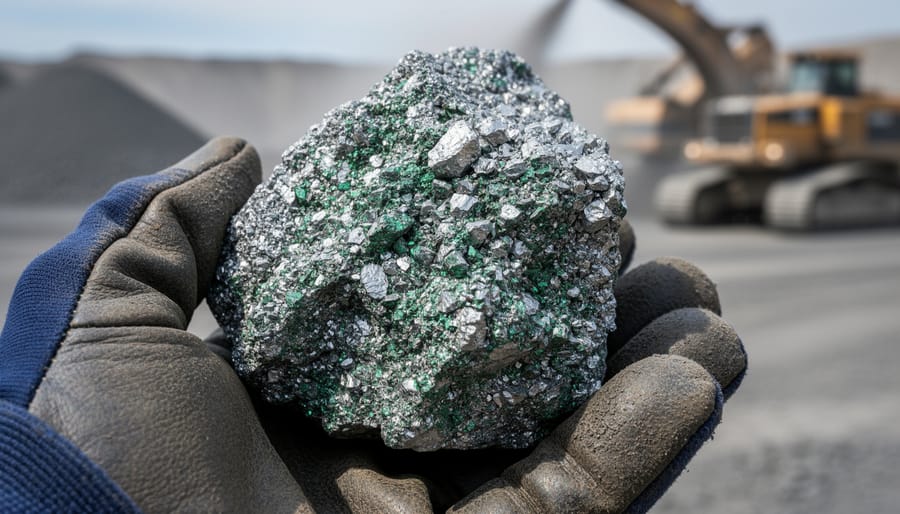
Governments don’t arbitrarily declare minerals critical. The designation follows a systematic evaluation process that weighs three core factors: how vulnerable the supply chain is to disruption, how important the mineral is to key economic sectors, and whether viable substitutes exist.
Most critical mineral assessments begin with supply risk analysis. Agencies examine where production is concentrated geographically, evaluate the political stability of major producing regions, and identify chokepoints in processing capacity. A mineral sourced from a single country or refined at just a handful of facilities faces higher supply vulnerability than one with diverse global production. They also consider how quickly new mines can come online if existing sources fail, and whether stockpiles or recycling could bridge a supply gap.
Economic importance forms the second pillar. Evaluators identify which industries depend on the mineral and calculate the downstream economic value those sectors generate. Nickel’s role in stainless steel and battery cathodes, for example, supports manufacturing worth billions and underpins the renewable energy transition. A mineral used only in niche applications might have vulnerable supply but won’t be deemed critical if its absence wouldn’t significantly impact the broader economy.
The third criterion examines substitutability. Can manufacturers easily switch to alternative materials without major performance loss or cost increases? Lithium in batteries has limited substitutes for energy density, making it harder to replace than minerals with multiple functional alternatives. Agencies also weigh how long substitution would take and whether it requires retooling entire production lines.
These frameworks aren’t static. Countries review and update their critical mineral lists every few years as technologies evolve, new deposits are discovered, and geopolitical relationships shift. What qualifies as critical today might become abundant tomorrow, or vice versa, making these assessments living documents rather than permanent classifications.
Categories of Critical Minerals in Battery Technology
Battery Metals: Nickel, Lithium, and Cobalt
Nickel, lithium, and cobalt form the core of most lithium-ion batteries powering electric vehicles and grid storage systems. Each metal plays a distinct role in battery chemistry, and understanding their functions helps explain why they’ve earned critical mineral status.
Lithium enables the movement of ions between electrodes during charging and discharging, the fundamental process that stores and releases energy. Without lithium, current battery technology wouldn’t exist in its present form.
Nickel has emerged as the workhorse of high-energy-density cathodes, particularly in NMC (nickel-manganese-cobalt) and NCA (nickel-cobalt-aluminum) batteries. Higher nickel content means greater energy storage per unit of weight, which translates directly to longer driving ranges in electric vehicles. Canada produces roughly 180,000 tonnes of nickel annually, with major operations in Ontario, Manitoba, and Quebec positioning the country as a strategic supplier for North American battery manufacturers.
Cobalt enhances battery stability and lifespan, though manufacturers are working to reduce cobalt content due to supply chain concerns and ethical sourcing challenges in certain producing regions. This shift toward nickel-rich chemistries actually strengthens Canada’s strategic position.
The interplay between these three metals determines a battery’s performance characteristics, its energy density, charging speed, thermal stability, and operational lifespan, making their reliable supply fundamental to the renewable energy transition.
Supporting Elements: Graphite, Manganese, and Rare Earths
While nickel, lithium, and cobalt form the core of battery chemistry, several supporting minerals play equally vital roles in making electric vehicles and renewable energy systems work.
Graphite serves as the anode material in lithium-ion batteries, comprising roughly 50% of a battery’s weight, more than any other mineral. Canadian deposits offer both the flake graphite used in batteries and the high-purity material needed for advanced applications. The country’s graphite resources are attracting investment as manufacturers seek alternatives to overseas supply chains.
Manganese improves battery stability and reduces costs when blended into cathode formulations. It’s particularly important in lithium iron phosphate (LFP) batteries gaining popularity in commercial vehicles. Canada produces manganese as a byproduct of nickel mining in some operations, creating potential synergies for integrated producers.
Rare earth elements, particularly neodymium, praseodymium, and dysprosium, are essential for the permanent magnets in electric motors and wind turbines. While not technically in the battery itself, these minerals make renewable energy systems function. Indigenous communities in northern Canada are exploring rare earth development on their territories, emphasizing partnerships that respect traditional lands while supporting the energy transition.
Together, these supporting elements complete the mineral portfolio needed for battery production and clean energy infrastructure.
Emerging Battery Materials
Beyond today’s dominant battery metals, several minerals are moving from research labs into commercial production as manufacturers pursue higher energy density, faster charging, and lower costs. Sodium is attracting significant attention as a lithium alternative for grid-scale storage, drawing on abundant salt deposits rather than limited lithium reserves. Silicon shows promise for next-generation anodes, potentially increasing battery capacity substantially over current graphite-based designs, though technical challenges around expansion and degradation remain.
Vanadium supports large-scale flow batteries for renewable energy storage, offering advantages in long-duration applications where lithium-ion falls short. Fluorine compounds are gaining traction in solid-state battery development, where they could enable safer, more energy-dense cells without liquid electrolytes. For Canadian nickel producers, these emerging materials represent both opportunity and competition: some next-generation chemistries reduce nickel content, while others require it in new forms or combinations, making adaptability crucial for long-term positioning in evolving battery markets.
How Critical Minerals Are Used Across the Battery Supply Chain
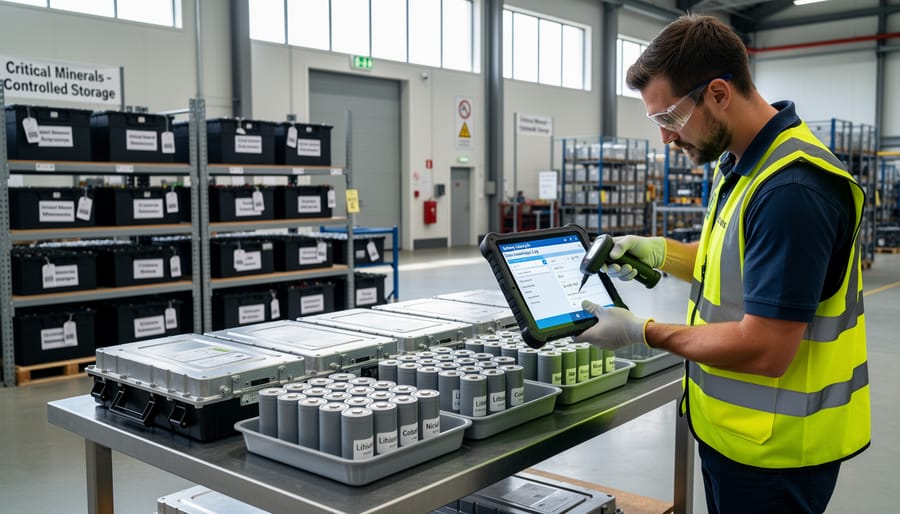
The journey from ore to electric vehicle battery pack reveals a sophisticated supply chain where critical minerals pass through multiple transformation stages, each adding value and complexity. Understanding this progression helps Canadian nickel producers identify opportunities, partnerships, and investment priorities across the battery ecosystem.
Critical minerals enter the battery supply chain at distinct stages:
- Mining and concentration, extracting ore and producing mineral concentrates
- Refining and purification, processing concentrates into battery-grade materials
- Precursor and cathode production, combining refined materials into active battery components
- Cell manufacturing, assembling cathodes, anodes, and electrolytes into functioning cells
- Battery pack assembly, integrating cells with thermal management and electronics systems
Nickel’s path through this chain demonstrates how critical minerals move from rock to battery. Mining in Canada produces nickel sulfide or laterite ore, which then undergoes concentration to separate valuable minerals from waste rock. This concentrate typically contains 6-12% nickel, far below battery requirements.
The refining stage transforms concentrate into Class I nickel (99.8% purity), either through pyrometallurgical smelting or hydrometallurgical processing. Battery applications demand even higher purity, so refiners increasingly produce nickel sulfate directly, meeting the stringent chemical specifications that cathode manufacturers require.
At the precursor stage, nickel sulfate combines with cobalt and manganese compounds in precise ratios to form mixed hydroxide or sulfate precursors. These precursors determine the cathode’s electrochemical properties. A high-nickel NMC 811 cathode (80% nickel, 10% manganese, 10% cobalt) delivers greater energy density than earlier formulations, extending electric vehicle range but requiring tighter quality control throughout production.
Cathode producers then process these precursors with lithium sources to create the active material that stores and releases energy in battery cells. This lithium nickel manganese cobalt oxide powder gets coated onto aluminum foil, forming the cathode electrode. Meanwhile, graphite-based anodes coat copper foil on the opposite side.
Cell manufacturers assemble these electrodes with separators and electrolyte in controlled environments, then seal and test each cell before delivery to battery pack assemblers. Pack assembly integrates hundreds or thousands of individual cells with cooling systems, battery management electronics, and safety mechanisms, creating the complete energy storage system that powers electric vehicles and grid storage installations.
Canada’s Strategic Position in Critical Minerals
Canada holds a unique position in the global critical minerals landscape, combining abundant natural resources with established mining expertise and a stable regulatory environment. The country produces 60 minerals and metals, with significant reserves of nickel, cobalt, lithium, and graphite, all designated as critical for the battery supply chain. This resource wealth positions Canada as a strategic partner for nations seeking to reduce dependence on concentrated supply chains and diversify their sources of battery materials.
What sets Canada apart isn’t just extraction capacity. The country has developed sophisticated processing infrastructure, particularly for nickel, where operations span from mine to refined metal and increasingly into battery-grade materials. Major nickel mining regions in Ontario, Quebec, Manitoba, and Newfoundland and Labrador support an integrated value chain that appeals to battery manufacturers looking for transparent, responsible sourcing.
Recent federal initiatives have sharpened this competitive edge. The Canadian Critical Minerals Strategy, updated in 2024, identified six priority minerals, lithium, graphite, nickel, cobalt, copper, and rare earth elements, and committed substantial funding to strengthen domestic processing capacity. These investments target the middle stages of the battery supply chain, where Canada has historically exported raw materials rather than capturing value through refining and precursor production.
Canadian producers can leverage this momentum by aligning operations with the sustainable mining benchmark the country is establishing globally. Battery manufacturers increasingly prioritize suppliers who meet stringent environmental and social governance standards. Canada’s regulatory framework, emissions intensity tracking, and emphasis on Indigenous partnership create measurable advantages in contracts where supply chain transparency matters.
Partnerships are accelerating. Automakers and battery producers have announced agreements with Canadian mining companies, securing long-term offtake and sometimes co-investing in downstream processing facilities. For nickel producers, this represents an opportunity to move beyond commodity sales toward strategic relationships that guarantee market access and premium pricing tied to sustainability credentials.
What Nickel Producers Need to Know About Critical Mineral Designations
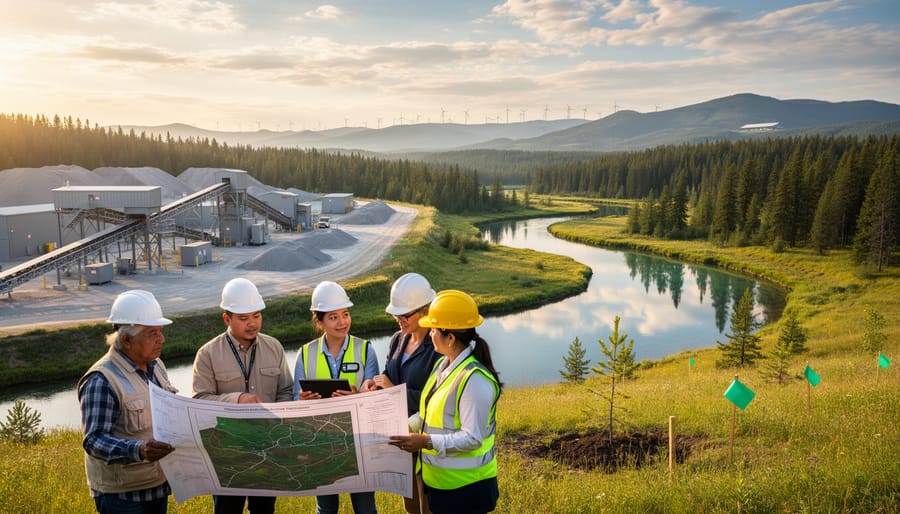
Critical mineral designation opens tangible opportunities for nickel producers, but it also introduces expectations around security of supply, environmental performance, and transparency. When a mineral appears on Canada’s critical minerals list, producers gain preferred access to federal programs designed to de-risk exploration, accelerate permitting for processing facilities, and support infrastructure development in remote regions. The Critical Minerals Infrastructure Fund and Strategic Innovation Fund both prioritize projects that strengthen domestic supply chains for battery materials, making capital-intensive refining and precursor production more financially viable.
Market access shifts when buyers recognize your product as strategically important. Automakers and battery manufacturers increasingly seek suppliers who can demonstrate compliance with responsible sourcing frameworks and contribute to diversified, secure supply chains outside of concentrated jurisdictions. Critical mineral status signals that your nickel meets these criteria, which can translate into premium contracts and long-term offtake agreements. Some producers have leveraged this designation to negotiate partnerships with battery cell manufacturers looking to establish North American production footprints.
How does critical mineral status affect my operations?
It creates eligibility for federal funding programs, streamlined permitting pathways for expansion projects, and enhanced market positioning with battery manufacturers seeking secure supply chains.
What sustainability standards apply to critical mineral producers?
Producers must demonstrate environmental management systems, community engagement practices, and increasingly, greenhouse gas emissions tracking aligned with battery industry standards like the Global Battery Alliance’s Battery Passport.
How do I demonstrate supply chain security to buyers?
Document your production capacity, processing capabilities, jurisdictional stability, and partnerships with downstream manufacturers. Third-party certification through initiatives like the Initiative for Responsible Mining Assurance strengthens credibility.
Sustainability requirements have intensified alongside critical mineral designations. Battery manufacturers face pressure to report scope 3 emissions, meaning they need granular data on the carbon footprint of mined and refined materials. Producers who invest in emissions reduction, mine closure planning, and water management systems position themselves as preferred suppliers. Indigenous partnership agreements and benefit-sharing models have become due diligence requirements rather than optional enhancements, particularly as international buyers scrutinize the social license of their raw material sources.
Indigenous Perspectives on Critical Mineral Development
Indigenous communities hold inherent rights to territories where critical minerals are found, and their perspectives fundamentally shape how responsible development proceeds. Many nations view these resources through a lens of stewardship that extends beyond single projects to consider impacts across generations. Rather than simple extraction, they often advocate for development models that respect traditional land use, protect water sources and ecosystems, and create lasting benefits for their communities.
Free, prior, and informed consent stands at the heart of meaningful engagement. This principle ensures communities have full information about proposed projects, time to consider implications, and genuine authority to say yes or no. When mining and Indigenous communities work as true partners from early exploration through closure planning, projects tend to proceed more smoothly and sustainably.
Successful collaborations in Canadian nickel mining demonstrate what partnership looks like in practice. Impact and benefit agreements go beyond employment quotas to include environmental monitoring roles, business development support, and revenue sharing that funds community priorities like education and infrastructure. Some agreements establish co-management of environmental oversight, recognizing that Indigenous knowledge systems offer crucial insights into ecosystem health and long-term sustainability.
Environmental stewardship remains paramount. Indigenous nations often require proactive measures beyond regulatory minimums, including baseline studies that incorporate traditional ecological knowledge, adaptive management protocols that respond to observed changes, and restoration commitments backed by substantial financial assurances. These requirements align closely with the sustainability standards international battery manufacturers now demand from their supply chains.
For nickel producers, building respectful relationships with Indigenous communities isn’t just ethical practice, it creates more resilient projects with stronger social licenses, better environmental outcomes, and competitive advantages in markets that increasingly value responsible sourcing.
Understanding critical minerals is no longer just a policy matter, it’s central to how Canada shapes its role in the global transition to renewable energy. For nickel producers, this knowledge translates directly into strategic advantage. The designation of nickel and other battery metals as critical minerals opens doors to government support, strengthens market positioning, and creates pathways for long-term partnerships with battery manufacturers seeking secure, responsibly sourced materials.
Yet opportunity comes with responsibility. Canada’s path forward depends on balancing economic growth with environmental stewardship and genuine partnership with Indigenous communities. The producers who thrive will be those who recognize that critical mineral status isn’t just about extraction, it’s about building resilient, ethical supply chains that support both economic prosperity and ecological health.
The renewable energy transition needs Canadian nickel, but it needs it produced in ways that reflect our values. As governments refine their strategic lists and investment frameworks, nickel producers have a unique chance to help define what responsible critical mineral development looks like. This means engaging with communities, adopting leading environmental practices, and actively participating in policy discussions.
The future of Canada’s battery technology sector is being written now. Those who understand what makes minerals critical, and why that matters beyond economics alone, will help shape a resource industry that serves both prosperity and sustainability for generations to come.