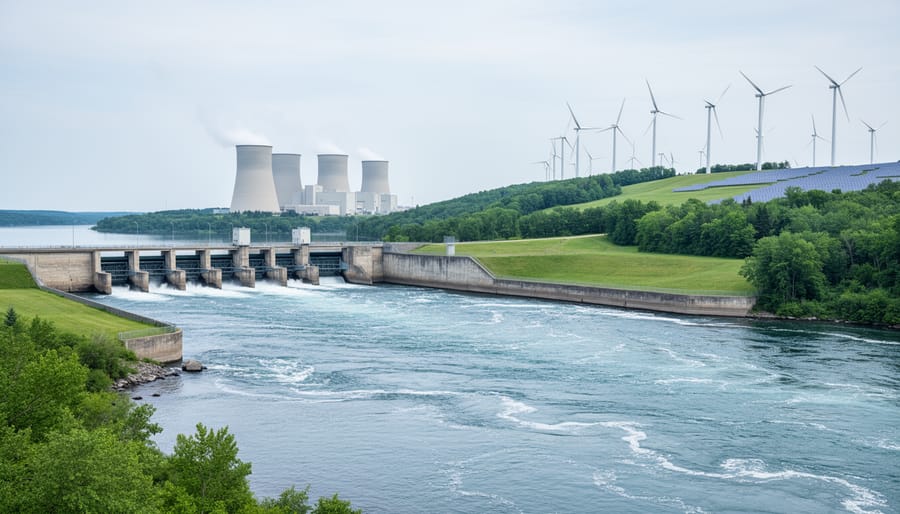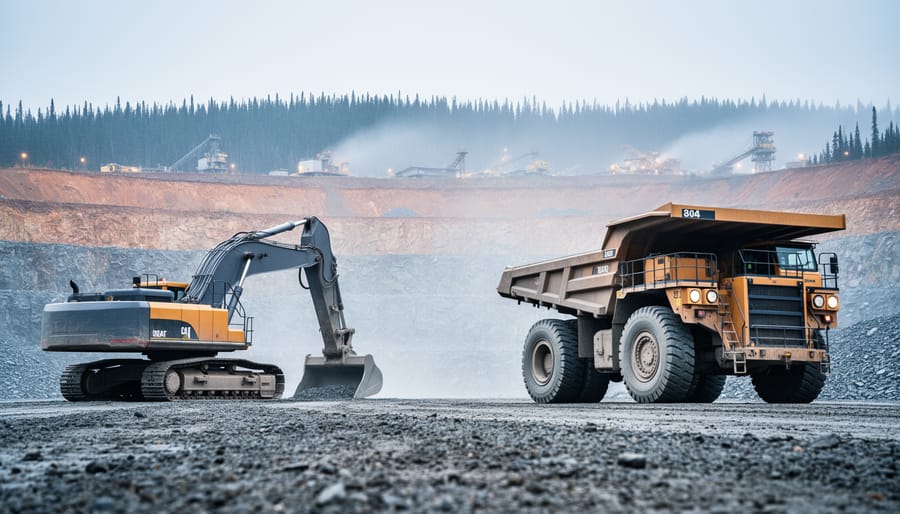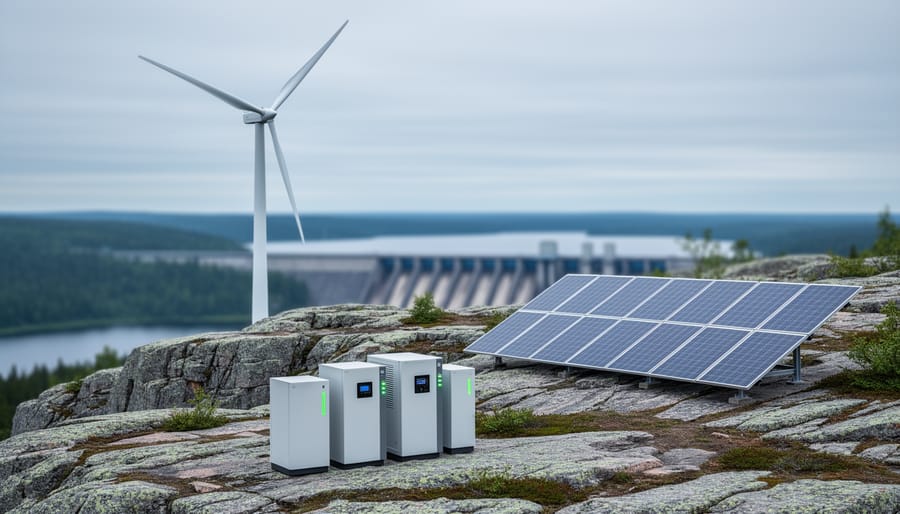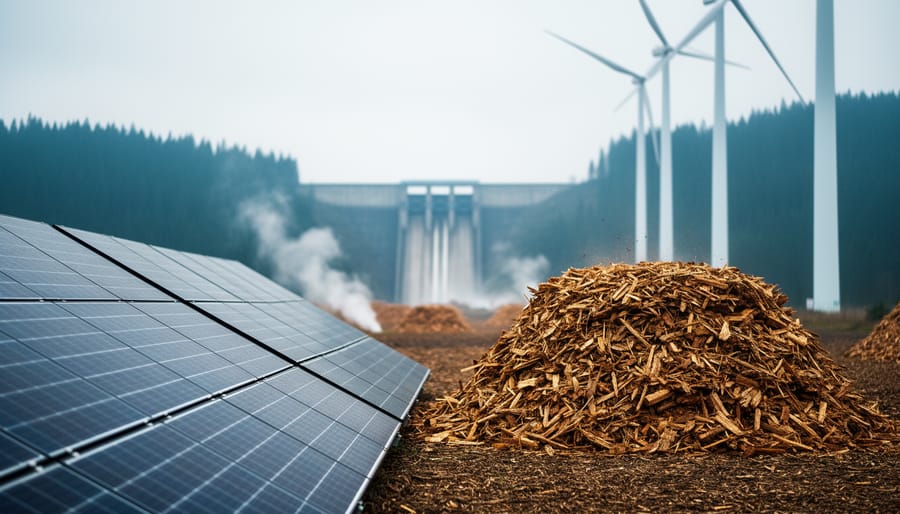
The five most practical renewable resources powering our transition away from fossil fuels are solar energy, wind power, hydroelectricity, geothermal energy, and biomass. Each harnesses naturally replenishing sources to generate electricity or heat, but understanding these technologies means looking beyond their clean operation to examine what materials and infrastructure make them possible in the first place.
Canada stands at an interesting crossroads in the renewable transition. We’ve built hydroelectric capacity for over a century, particularly in Quebec and British Columbia, where geography provides ideal conditions. Wind farms now dot the prairies and Atlantic coastline, while solar installations spread across residential rooftops and utility-scale projects from Ontario to Alberta. These systems deliver tangible climate benefits, reducing greenhouse gas emissions while creating economic opportunities in manufacturing, installation, and maintenance.
Yet the infrastructure supporting renewable energy depends on substantial material inputs. Solar panels require silicon, silver, and increasingly rare earth elements. Wind turbines demand steel, copper, and permanent magnets containing neodymium and dysprosium. Battery storage systems rely heavily on lithium, cobalt, and nickel. This reality doesn’t diminish the value of renewables; rather, it highlights why responsible resource extraction matters as much as the technologies themselves.
Indigenous communities across Canada are increasingly partnering in renewable projects, bringing traditional knowledge about land stewardship alongside economic development goals. These collaborations point toward a more balanced approach, one that acknowledges both the promise of renewable energy and the responsibility to source its components ethically and sustainably. The following examples explore each major renewable resource with this honest, comprehensive perspective.
Understanding the Connection: Why Renewable Energy Needs Non-Renewable Resources
The transition to renewable energy represents one of humanity’s most ambitious infrastructure projects, yet it comes with a hidden materials cost that few fully appreciate. Every wind turbine, solar panel, and battery storage system requires substantial quantities of metals and minerals extracted from the earth. Understanding the role of non-renewables in building renewable infrastructure is essential for anyone committed to genuine sustainability.
A single three-megawatt wind turbine contains approximately 335 tonnes of steel, 4.7 tonnes of copper, and 3 tonnes of aluminum, along with rare earth elements for its generator magnets. Solar installations demand copper for wiring, silver for conductivity, aluminum for frames, and silicon processed at high temperatures. Grid-scale battery systems, critical for storing intermittent renewable power, require lithium, cobalt, nickel, and graphite in volumes that dwarf current mining capacity. The critical minerals needed for this energy transformation will test our ability to extract resources responsibly.
This reality doesn’t diminish the value of renewable energy. It clarifies the work ahead. Responsible sourcing becomes non-negotiable when demand for certain metals could increase five-fold by 2030. A circular economy approach, where materials circulate through multiple use cycles rather than following a linear extract-use-discard path, offers a practical solution to resource constraints. Indigenous land stewardship principles provide crucial guidance here, emphasizing decisions that honor future generations rather than maximizing immediate extraction. Many Indigenous communities in Canada already apply this long-term thinking to resource development, requiring mining operations to demonstrate not just environmental compliance but genuine partnership and lasting benefit to the people whose territories provide these materials.
How We Selected These Five Renewable Resources
Selecting these five renewable resources wasn’t arbitrary. We focused on technologies that meet four critical criteria shaping Canada’s energy transition in 2026.
First, global deployment scale matters. Solar, wind, hydroelectric, geothermal, and biomass collectively generate the vast majority of renewable electricity worldwide, with proven track records across diverse climates and geographies.
Second, these technologies align with Canada’s unique energy landscape. Our geography offers exceptional hydroelectric potential already being harnessed, vast wind corridors across prairie and coastal regions, significant biomass from forestry operations, emerging geothermal opportunities in Western provinces, and increasing solar viability even at northern latitudes.
Third, we prioritized material intensity. Each technology requires substantial quantities of non-renewable resources, copper, nickel, rare earths, steel, making them ideal for examining the paradox at the heart of renewable energy deployment. Understanding these material demands helps us plan responsibly.
Finally, potential for sustainable implementation guided our choices. All five can incorporate Indigenous partnership models, responsible mining practices, and circular economy approaches. They represent mature technologies with clear pathways toward reducing environmental impact while meeting energy needs, rather than experimental systems with uncertain futures.
1. Solar Energy: Harnessing Sunlight Through Critical Materials
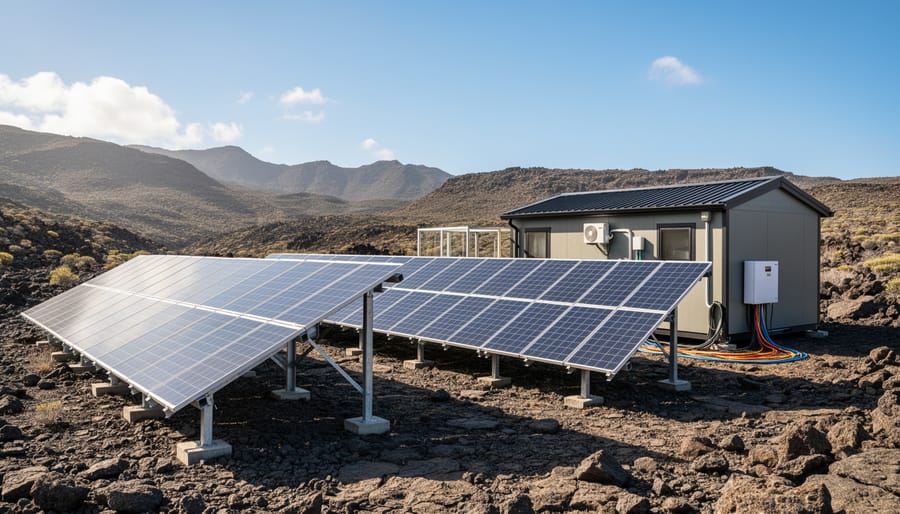
Solar panels capturing sunlight on rooftops and solar farms represent one of the fastest-growing renewable energy sources worldwide, yet their construction depends on an intricate supply chain of non-renewable materials. Two main technologies dominate the sector: photovoltaic (PV) panels that convert sunlight directly into electricity, and concentrated solar power (CSP) systems that use mirrors to generate heat for turbine-driven generation.
A standard solar panel relies on several critical materials mined from the earth:
- Silicon wafers form the photovoltaic cells, requiring high-purity quartz processing
- Silver creates conductive pathways on cell surfaces, with each panel using 15-20 grams
- Copper wiring connects cells and transmits electricity throughout the system
- Aluminum frames provide structural support and weather resistance
- Glass panels with rare earth dopants protect cells while maximizing light transmission
Thin-film technologies add tellurium and indium to this list, materials with limited global reserves that raise long-term availability questions. The International Energy Agency estimates solar panel production will require triple the current silver supply by 2030, creating pressure on mining operations to scale responsibly.
Canada’s solar potential extends far beyond southern latitudes. Remote and Indigenous communities across the North are embracing solar-plus-storage systems to reduce diesel dependence, with installations in Nunavut and Northwest Territories proving viable even at 60+ degrees latitude. These projects deliver energy sovereignty while cutting fuel transport costs and emissions. The Fort Chipewyan Solar Project in Alberta, developed in partnership with local First Nations, demonstrates how renewable technology materials sourced through ethical supply chains can power Indigenous-led climate solutions.
Recycling presents the next frontier. Canadian companies like Burnaby’s Solarcycle have pioneered recovery processes that extract 95% of silver and copper from decommissioned panels, creating a domestic secondary supply stream. As the first wave of installations from the early 2000s reaches end-of-life, these circular economy approaches will increasingly offset virgin material demands, proving that solar energy can become more sustainable with each generation of technology.
2. Wind Power: The Metals Behind the Turbines
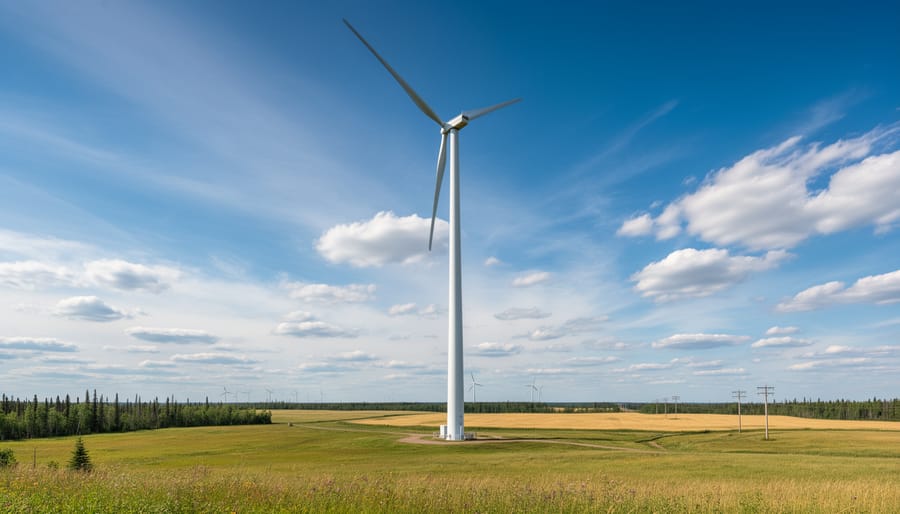
A single modern wind turbine contains upwards of 300 tonnes of steel in its tower and nacelle, along with 4.7 tonnes of copper in generators and cabling, and roughly 600 kilograms of rare earth elements embedded in the permanent magnets that make direct-drive turbines so efficient. For offshore installations, those material demands intensify. The salt spray and marine environment require nickel-alloyed stainless steels throughout the structure, from the foundation to the nacelle housing, to prevent catastrophic corrosion failures over the turbine’s 25-year lifespan.
The rare earth elements neodymium and dysprosium deserve particular attention. These metals enable the powerful permanent magnets in modern turbine generators, eliminating the need for gearboxes and dramatically improving reliability. Yet nearly all rare earth refining currently happens overseas, creating supply chain vulnerabilities that Canada’s critical minerals strategy aims to address. Domestic nickel production plays a complementary role here: the nickel in clean energy applications extends beyond batteries to the structural integrity of offshore wind farms, where failure isn’t an option.
Canada’s wind sector has grown substantially through partnerships that respect Indigenous rights and create shared economic benefits. The Lukowich Energy Joint Venture in Alberta, co-owned by Kainai Nation and Piikani Nation, operates wind farms that generate both clean electricity and revenue for community programs. In Ontario, the Biigtgong Nishnaabeg First Nation partnered on wind projects that now fund education, housing, and cultural initiatives. These aren’t token gestures; they’re Impact Benefit Agreements that recognize Indigenous peoples as decision-makers and equity partners rather than passive stakeholders.
As the first generation of turbines installed in the early 2000s reaches end-of-life, recycling has become urgent. Steel and copper recovery rates exceed 90 percent, but rare earth magnets present challenges. Companies in Quebec and British Columbia are pioneering processes to extract and refine rare earths from decommissioned turbines, closing the loop and reducing reliance on new mining. The blades themselves, typically fiberglass composites, remain the toughest recycling puzzle, though cement co-processing and chemical breakdown methods show promise for 2026 and beyond.
3. Hydroelectric Power: Infrastructure Built on Minerals
Hydroelectric power generates electricity from flowing water, and while the energy source itself renews with each rainfall, the infrastructure demands staggering quantities of mined materials. A single large dam requires millions of tonnes of concrete, a mixture of crushed limestone, gravel aggregate, and sand, along with thousands of tonnes of steel reinforcement. The turbines that convert water’s kinetic energy into electricity contain specialized alloy steels, copper windings for generators, and corrosion-resistant nickel alloys in high-stress components. Even the transmission lines carrying power to distant communities depend on copper and aluminum conductors supported by steel towers.
Canada generates roughly 60% of its electricity from hydroelectric sources as of 2026, making it one of the world’s top five hydro producers. This leadership position stems from abundant water resources and decades of major dam construction, but the relationship between these projects and Indigenous communities has fundamentally shifted. Early developments often proceeded without meaningful consultation, displacing entire communities and flooding traditional territories. Modern projects now require Free, Prior and Informed Consent from affected Indigenous nations, with Impact Benefit Agreements that ensure revenue sharing, environmental monitoring roles, and employment opportunities. The Keeyask Generating Station in Manitoba, completed through partnership with four Cree nations, demonstrates this evolving approach, Indigenous communities hold ownership stakes and participate in all project phases.
Run-of-river systems offer a smaller-footprint alternative to massive dams. These installations divert a portion of a river’s flow through turbines before returning it downstream, eliminating the need for large reservoirs. While they require less concrete and steel than traditional dams, they still demand significant mineral resources for intake structures, penstocks, powerhouses, and grid connections. The essential role explained through these material requirements highlights why responsible mining practices directly enable clean energy.
Balancing hydroelectric benefits with ecological impacts remains challenging. Fish passage systems, minimum flow requirements, and habitat restoration programs now form standard practice, addressing concerns about river ecosystem disruption that earlier projects ignored.
4. Geothermal Energy: Tapping Earth’s Heat with Advanced Materials
Geothermal energy extracts heat from beneath Earth’s surface to generate electricity and provide direct heating. Unlike solar or wind, it delivers baseload power 24/7, making it particularly valuable for remote communities seeking energy independence. Three main technologies dominate the field: flash steam plants that convert high-pressure geothermal water directly to steam, binary cycle systems that use heat exchangers to vaporize a secondary fluid with a lower boiling point, and enhanced geothermal systems (EGS) that fracture hot dry rock to create artificial reservoirs.
The extreme conditions in geothermal wells, temperatures exceeding 300°C combined with highly corrosive brines containing chlorides, sulfides, and dissolved minerals, demand specialized materials that can withstand decades of thermal cycling and chemical attack. Nickel alloys form the backbone of this infrastructure. Pipes, well casings, and turbine components use nickel-chromium-molybdenum alloys like Inconel 625 and Hastelloy C-276, which maintain strength and resist pitting in acidic, high-temperature environments. Stainless steel grades containing 18-25% nickel handle piping systems and structural components throughout the plant. Binary cycle plants rely on titanium heat exchangers that transfer geothermal heat to working fluids without corroding. Copper windings in generators convert mechanical energy to electricity, while copper alloys appear in condensers and cooling systems.
Canada’s geothermal potential remains largely untapped despite favorable geology in British Columbia, Alberta, Saskatchewan, and the Yukon. Western provinces possess deep sedimentary basins and volcanic systems suitable for both electricity generation and direct-use heating. Northern communities face diesel dependence and high energy costs, making geothermal particularly attractive. The Kitselas First Nation near Terrace, BC, is developing a geothermal district heating system that combines hydrogeological surveys informed by traditional land knowledge with modern drilling technology. Similar projects in the Yukon engage Indigenous communities from initial exploration through operations, ensuring development aligns with cultural values and provides local economic benefits.
5. Biomass and Bioenergy: Converting Organic Matter with Industrial Equipment
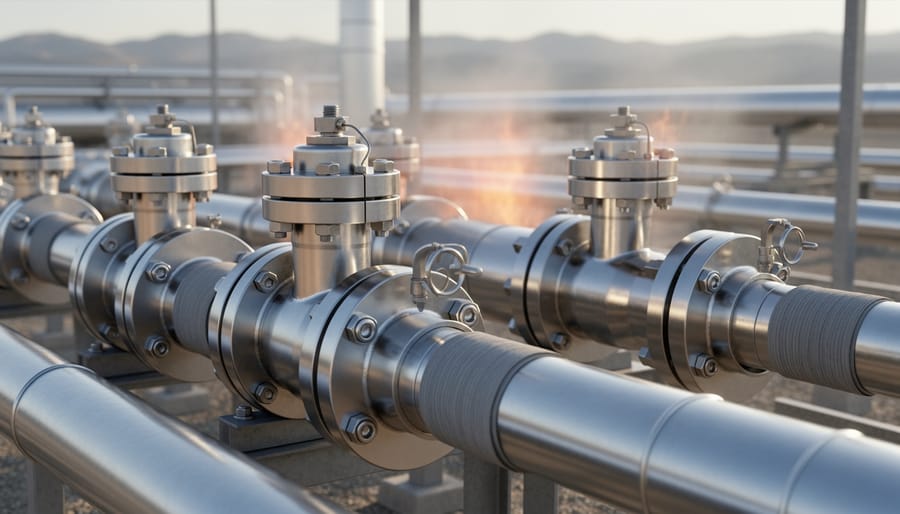
Biomass energy transforms organic matter, forest residues, agricultural waste, and dedicated energy crops, into heat and electricity through industrial conversion processes that demand significant quantities of specialized metals. Unlike solar panels or wind turbines, biomass facilities operate in corrosive, high-temperature environments where material durability determines both efficiency and longevity.
The conversion equipment relies on steel as its structural backbone. Boilers, gasifiers, and combustion chambers require thick steel walls to withstand temperatures exceeding 800°C while containing combustion gases and ash. These aren’t simple steel boxes; they’re engineered systems incorporating multiple alloy grades. Copper threading through electrical generators and control systems converts mechanical energy to electricity, while platinum-group metals serve as catalysts in advanced gasification systems that break down organic compounds into synthetic gas.
Corrosion presents the greatest material challenge. Biomass combustion produces acidic compounds and chlorides that aggressively attack standard metals. Stainless steel components, pipes, heat exchangers, and flue gas systems, depend on nickel content (typically 8-12%) to resist this chemical assault. Without nickel’s protective properties, replacement cycles shorten dramatically, driving up both costs and material consumption.
Canada’s forestry sector generates approximately 30 million tonnes of residues annually, representing untapped biomass potential. Several Indigenous communities have pioneered biomass projects that bridge traditional knowledge with modern technology. The Huu-ay-aht First Nations’ biomass facility on Vancouver Island processes forestry waste using culturally-informed forest management practices, while generating revenue and reducing diesel dependence in remote areas.
These initiatives demonstrate how biomass can achieve carbon neutrality when the organic matter would decompose naturally anyway, releasing carbon whether burned or left to rot. The distinction lies in managed harvesting that doesn’t exceed forest regrowth rates. Traditional Indigenous burning practices, refined over millennia, offer templates for sustainable biomass cycles, taking only what regenerates, respecting seasonal patterns, maintaining ecosystem health.
The industrial equipment enabling this renewable resource ultimately traces back to mining operations producing steel, copper, nickel, and platinum-group metals. Recognizing this dependency doesn’t diminish biomass’s value; it clarifies the full supply chain required for genuinely sustainable energy systems.
Building a Truly Sustainable Energy Future: Balancing Extraction and Innovation
The transition to renewable energy is not a choice between extraction and conservation; it’s a challenge that demands we do both with unprecedented care. Solar panels, wind turbines, hydroelectric infrastructure, geothermal systems, and biomass facilities collectively require millions of tonnes of nickel, copper, rare earth elements, steel, and other critical materials. Meeting global renewable energy targets for 2026 and beyond means dramatically scaling up mining activity, but doing so in ways that protect ecosystems, respect Indigenous rights, and build genuinely circular supply chains.
The path forward rests on three interconnected pillars. First, mining practices must evolve beyond traditional extraction models. Low-impact techniques, rigorous environmental monitoring, and rehabilitation plans that restore ecosystems after mining ends are now baseline expectations, not optional extras. Second, recycling infrastructure must catch up with deployment. Wind turbine blades, solar panels, and lithium-ion batteries reaching end-of-life in the coming decades represent vast reserves of recoverable materials. Countries that build robust recycling systems now will reduce future mining pressure and create domestic supply security. Third, technological innovation continues to reduce material intensity. Researchers are developing turbines that use fewer rare earth elements, solar cells that need less silver, and battery chemistries that rely on abundant materials rather than scarce ones.
Can renewable energy truly be sustainable if it requires mining?
Yes, when extraction follows responsible practices, includes proper environmental safeguards, and prioritizes recycling to create circular material flows. The goal is minimizing harm while enabling the transition away from fossil fuels.
How can we minimize the environmental impact of extracting materials for renewables?
Through low-impact mining techniques, rigorous rehabilitation of mined lands, transparent environmental monitoring, and siting decisions that avoid critical habitats and respect Indigenous territories.
What role can recycling play in reducing mining for renewable energy materials?
Recycling can recover 90 percent or more of metals from decommissioned solar panels, wind turbines, and batteries, significantly reducing the need for virgin materials as first-generation renewable infrastructure reaches end-of-life.
How are Indigenous communities involved in both mining and renewable energy?
Many Indigenous nations are active partners in resource projects through Impact Benefit Agreements, lead their own renewable energy developments combining traditional knowledge with modern technology, and shape environmental standards through land stewardship roles.
Canada stands at a unique crossroads. The country possesses both the critical minerals needed for global decarbonization and the renewable energy potential to power its own transition. This dual role creates an opportunity to demonstrate that resource extraction and environmental leadership are not contradictory. When mining communities, renewable energy developers, environmental scientists, and Indigenous nations collaborate from project conception through decommissioning, we build systems that honour both the land and the urgent need for climate action. The energy future we need won’t arrive through wishful thinking about materials magically appearing; it will be forged through honest conversations, shared decision-making, and a commitment to doing difficult work responsibly.