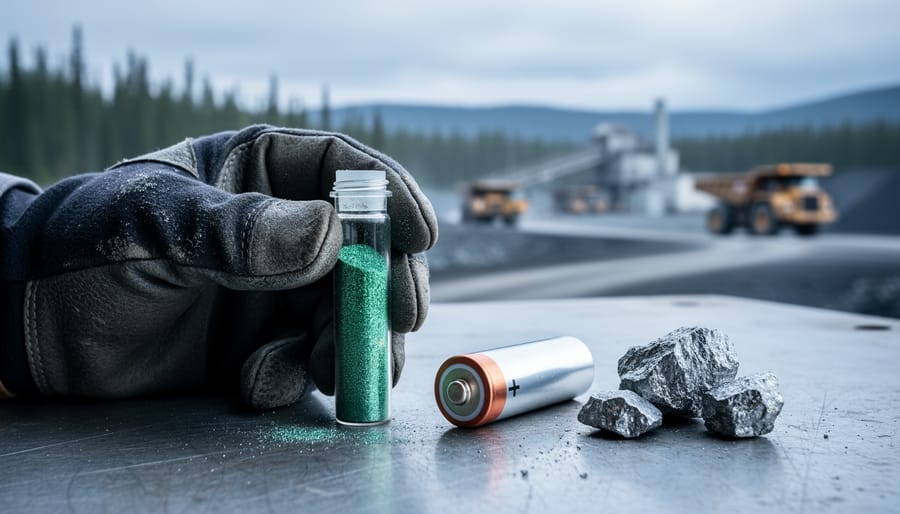
Canada is the world’s fourth-largest producer of nickel, extracting approximately 180,000 tonnes annually from operations concentrated in Ontario, Manitoba, Quebec, and Newfoundland and Labrador. This critical mineral underpins the global transition to clean energy, serving as an essential component in electric vehicle batteries, stainless steel production, and renewable infrastructure. The industry generates over $2.5 billion in annual economic output while employing thousands across mining, processing, and support sectors, yet its expansion sits at the intersection of economic opportunity, environmental stewardship, and the rights of Indigenous peoples whose traditional territories host many deposits.
The conversation around nickel mining in Canada has shifted dramatically. What was once dominated by discussions of sulfide deposits and traditional extraction methods now centers on responsibly meeting surging demand driven by electrification targets. Sudbury’s storied operations continue alongside newer projects in the Ring of Fire, a remote region in northern Ontario that holds one of North America’s largest chromite and nickel deposits. These developments unfold on lands where First Nations communities assert treaty rights and environmental concerns, making meaningful partnership and consent essential rather than optional.
Understanding how nickel gets from ore body to finished product requires examining geological processes, extraction technologies, tailings management, and the complex regulatory framework governing Canadian mining. Equally important are the Indigenous-led monitoring initiatives, reclamation innovations, and the sector’s role in global supply chains that position Canada as a preferred source of responsibly produced critical minerals for international markets seeking alternatives to higher-risk jurisdictions.
Why Nickel Matters: From Stainless Steel to the Green Economy
Nickel’s versatility has made it indispensable across industries for over a century, but its role is shifting from traditional manufacturing to powering the energy transition. While stainless steel production still consumes roughly two-thirds of global nickel supply, the metal’s unique properties, corrosion resistance, strength, and electrochemical stability, are driving explosive growth in clean energy applications. Electric vehicle batteries now represent the fastest-growing segment of nickel demand, with lithium-ion chemistries requiring substantial nickel content to boost energy density and extend driving range. The shift from nickel-cobalt-manganese (NCM) formulations to increasingly nickel-rich cathodes means a single EV battery can contain 30 to 50 kilograms of nickel, creating unprecedented demand as automakers race toward electrification targets.
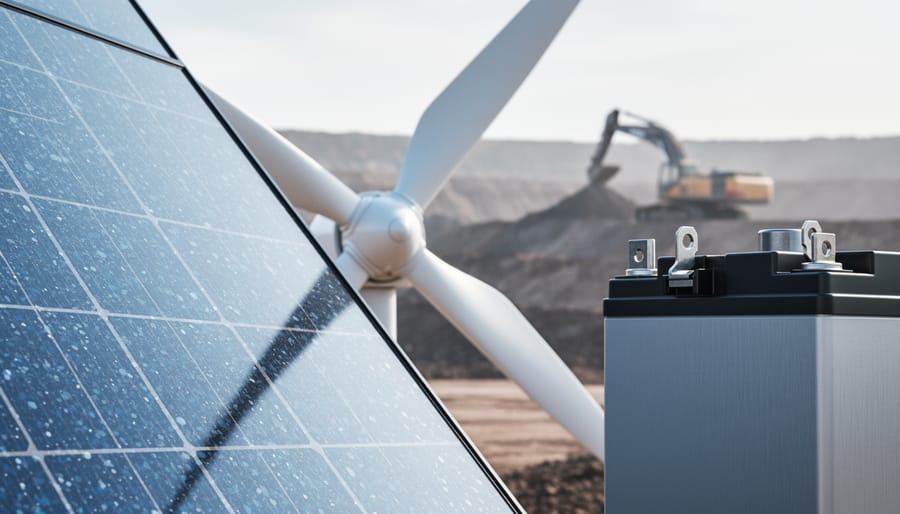
Beyond vehicles, renewable technology infrastructure depends on nickel for grid-scale energy storage systems that stabilize solar and wind power output. These batteries help utilities manage intermittent generation, storing excess energy during peak production for release when demand rises. Nickel also appears in hydrogen fuel cells and components for wind turbines, cementing its status as a critical mineral for climate action. Canada supplies roughly 180,000 tonnes of nickel annually, accounting for about 7% of global production, yet the country’s significance extends beyond volume. Canadian nickel operations increasingly prioritize lower carbon intensity through hydroelectric power and cleaner processing methods, addressing manufacturers’ growing scrutiny of supply chain emissions. As governments worldwide pursue net-zero commitments, demand for responsibly produced non-renewable materials like nickel will only intensify, positioning Canada’s mining sector at the intersection of economic opportunity and environmental leadership.
Where Nickel is Found: Canada’s Major Mining Regions
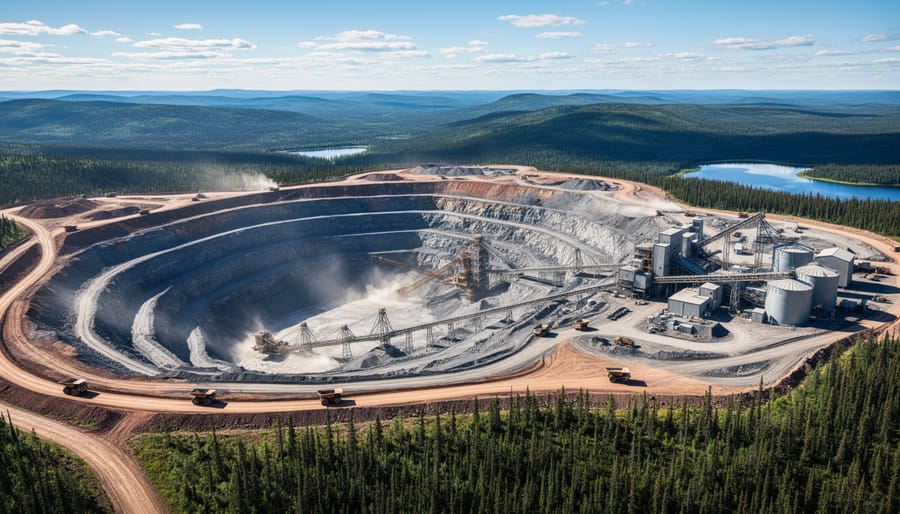
Canada’s nickel deposits are concentrated in three main provinces, each offering distinct geological characteristics and operational histories. Ontario dominates production, followed by Manitoba and Quebec, while northern territories hold emerging potential that could reshape the industry’s geography in coming decades.
The Sudbury Basin in northern Ontario stands as one of the world’s richest nickel districts, formed nearly 2 billion years ago when a meteorite impact created ideal conditions for mineral concentration. This ancient impact structure contains massive sulphide deposits that have sustained mining operations for over a century. Vale and Glencore operate large-scale underground mines here, producing nickel essential to Canada’s clean energy future. The basin’s geological complexity yields high-grade ore alongside copper and platinum group metals.
| Region | Key Operations | Deposit Type | Annual Production |
|---|---|---|---|
| Sudbury Basin, Ontario | Vale, Glencore | Massive sulphide | ~80,000 tonnes |
| Thompson Belt, Manitoba | Vale Thompson | Ultramafic-hosted | ~30,000 tonnes |
| Raglan, Quebec | Glencore Raglan | Massive sulphide | ~15,000 tonnes |
Manitoba’s Thompson Nickel Belt, discovered in 1956, hosts ultramafic-hosted deposits formed through different geological processes than Sudbury. Vale’s Thompson operation has anchored the regional economy for generations, though production has declined from historical peaks as older deposits mature.
In northern Quebec, the Raglan mine operates in one of Canada’s most remote mining environments, accessible primarily by air and seasonal ice roads. These high-grade sulphide deposits lie within the Cape Smith Belt, where nickel concentrations rival Sudbury’s best ores.
Northern territories including Nunavut and the Northwest Territories contain unexplored greenstone belts and komatiite formations that geologists believe hold significant nickel potential. As infrastructure develops and exploration technologies advance, these frontier regions may emerge as the next chapter in Canada’s nickel mining story.
How Nickel is Mined and Processed in Canada
Extraction Methods
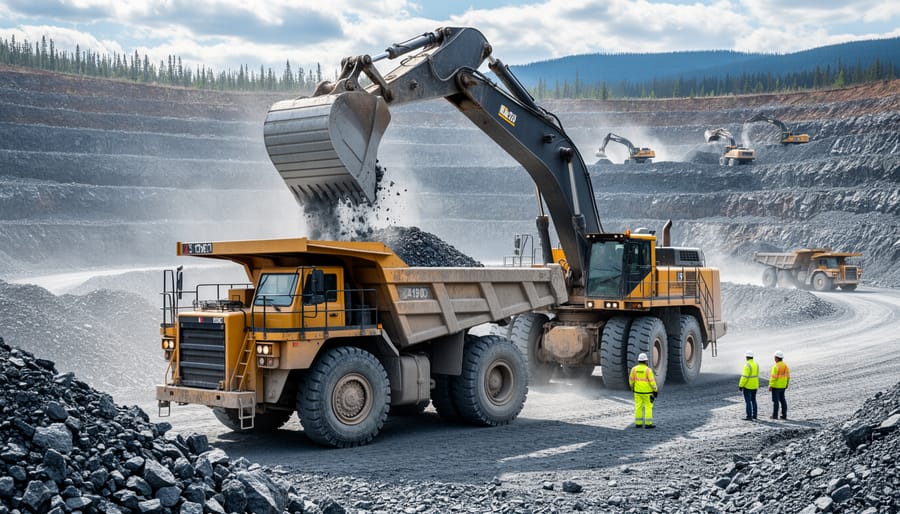
Nickel deposits in Canada are extracted using two primary methods, each chosen based on the depth, shape, and economics of the ore body.
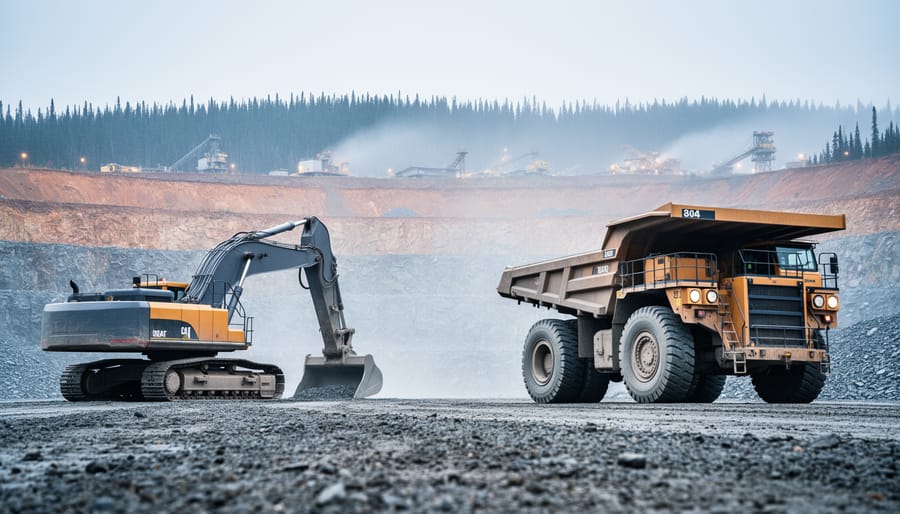
Underground mining dominates in Ontario’s Sudbury Basin and Manitoba’s Thompson region, where valuable nickel-copper sulfide deposits lie hundreds to thousands of metres below surface. Operations drill vertical or inclined shafts to reach the ore, then create horizontal tunnels called drifts to access mineralized zones. Miners use techniques like block caving, where large ore sections are systematically fractured and allowed to collapse, or longhole stoping, which drills and blasts ore in vertical sections. Underground methods minimize surface disturbance and make economic sense when ore grades are high enough to justify the higher extraction costs.
Open-pit mining applies when nickel deposits occur closer to surface in broad, low-grade formations. This method removes overburden (waste rock and soil) to expose ore in benched terraces, which are then drilled, blasted, and hauled to processing facilities. Open-pit operations move larger volumes of material at lower cost per tonne but create more visible landscape changes. The Raglan mine in northern Quebec employs open-pit extraction for shallow portions of its ore bodies before transitioning to underground as deposits deepen, a common hybrid approach that optimizes recovery across a mine’s life.
From Ore to Metal: Processing and Refining
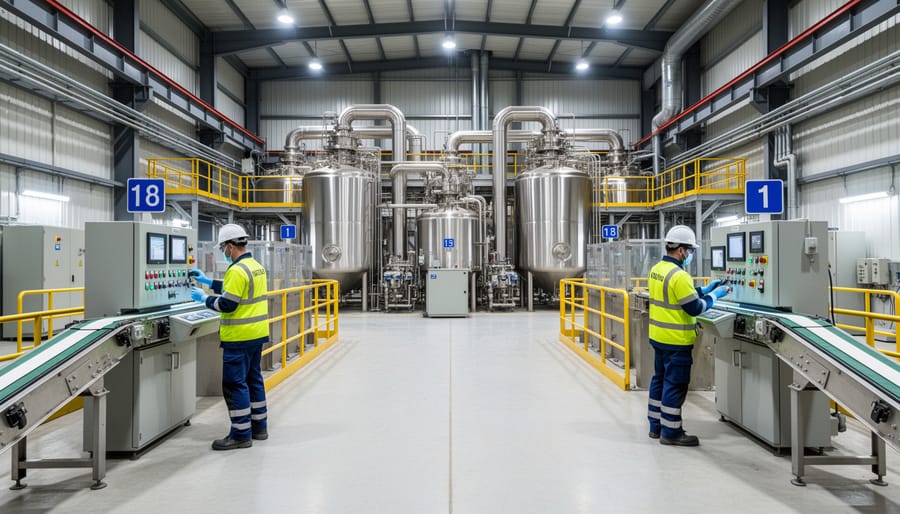
Once miners haul nickel ore to the surface, a multi-stage transformation begins. Canadian facilities use sophisticated processes to extract pure metal from rock containing as little as 0.5% to 3% nickel.
The ore first enters massive mills where rotating drums filled with steel balls crush it into fine powder. This grinding exposes the nickel-bearing minerals, making them easier to separate from waste rock. At concentrators, the powdered ore mixes with water and chemical reagents in flotation cells. Air bubbles carry nickel sulfide particles to the surface as froth while waste material sinks. The resulting concentrate contains 10% to 20% nickel, a crucial upgrade before smelting.
The concentration of nickel from raw ore to pure metal follows this sequence:
- Milling crushes ore into powder to liberate nickel-bearing minerals from surrounding rock
- Flotation separates valuable minerals using chemicals and air bubbles, producing concentrate
- Smelting melts concentrate at extreme temperatures to separate nickel matte from slag
- Converting removes iron and sulfur through controlled oxidation, increasing nickel purity
- Refining uses electrochemical or hydrometallurgical methods to produce 99.9% pure nickel
Modern Canadian smelters reach temperatures above 1,400°C to melt the concentrate, separating heavier nickel matte from lighter waste slag. The matte then goes to converters where oxygen blasts remove remaining iron and sulfur. Final refining occurs through electrolysis, passing electric current through dissolved nickel to deposit pure metal onto cathodes, or through advanced hydrometallurgical processes that use chemical solutions rather than extreme heat.
Facilities in Sudbury and Thompson have refined these techniques over decades, continuously improving energy efficiency and reducing emissions during each stage.
Environmental Considerations and Sustainable Practices
Innovations in Low-Carbon Nickel Production
Canadian nickel producers are pioneering technologies that dramatically reduce mining’s carbon footprint while maintaining the output needed for global battery production. Several operations now run electric underground loaders and haul trucks powered by renewable energy grids, eliminating diesel emissions in confined spaces and cutting greenhouse gas output by up to 40 percent compared to conventional equipment. Ontario’s Sudbury operations have integrated hydroelectric power into smelting processes, replacing fossil fuel combustion with clean electricity wherever technically feasible.
Tailings management has advanced beyond traditional containment. New dry-stacking methods reduce water consumption and minimize the footprint of waste storage areas, while some facilities extract residual metals from historical tailings, turning environmental liabilities into revenue streams. Advanced filtration systems recover process water for reuse, lowering freshwater withdrawal by millions of litres annually.
Several Canadian miners are piloting carbon capture technologies at smelters, aiming to trap emissions before they enter the atmosphere. Though still in early stages, successful implementation could position Canada as a supplier of truly low-carbon nickel, a critical differentiator as automakers scrutinize battery supply chain emissions. These innovations aren’t just environmental gestures; they’re strategic investments that align Canadian nickel with the clean economy it helps power.
Indigenous Communities and Nickel Mining
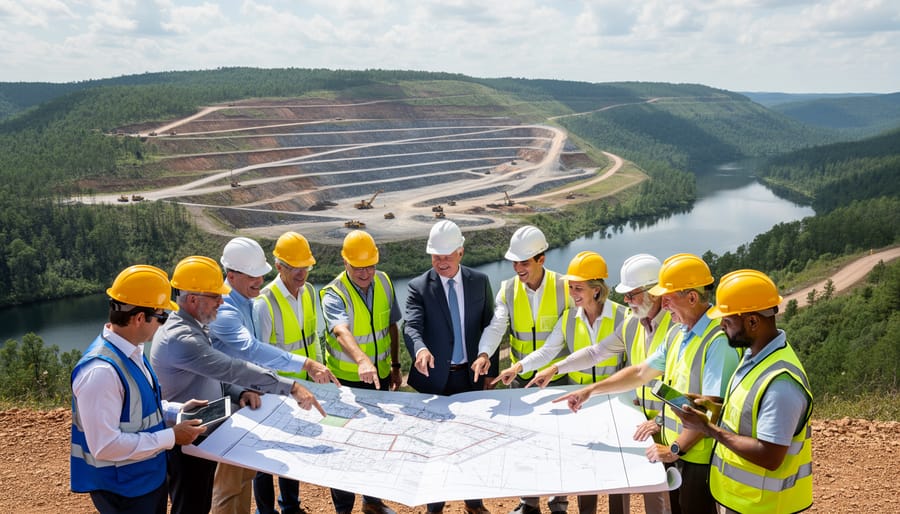
Most of Canada’s major nickel deposits lie on the traditional territories of Indigenous peoples, making the relationship between mining companies and First Nations, Métis, and Inuit communities fundamental to how projects proceed. Over the past two decades, this relationship has evolved from one often marked by exclusion and conflict toward models emphasizing partnership, though significant challenges remain.
Consultation has become a legal requirement in Canada, rooted in the duty to consult and accommodate established by constitutional law and strengthened through court decisions. Before a nickel mining project can advance, companies and governments must engage with Indigenous communities whose rights and interests may be affected. Meaningful consultation goes beyond checking boxes. It involves early engagement, transparent information sharing about potential impacts, and genuine consideration of community concerns in project design.
Impact and Benefit Agreements (IBAs) have emerged as the primary tool for formalizing relationships between mining companies and Indigenous communities. These negotiated agreements typically include employment and training commitments, business development opportunities for Indigenous contractors and suppliers, financial compensation, and provisions for environmental monitoring and cultural protection. IBAs remain confidential in most cases, but successful examples have delivered substantial economic participation. At Vale’s operations in the Thompson region of Manitoba, the Nisichawayasihk Cree Nation has secured training programs, preferential employment, and contracting opportunities that have made mining a significant local employer.
Some communities have moved beyond participation to ownership stakes and resource development rules that reflect their values. The Tahltan Nation in northern British Columbia has established a comprehensive framework governing how mining proceeds on their territory, including environmental standards that exceed provincial requirements.
Yet tensions persist. Communities sometimes feel consultation timelines are inadequate, that their concerns about water quality or sacred sites aren’t fully addressed, or that promised benefits haven’t materialized. Environmental monitoring remains a particular concern, some First Nations have established independent monitoring programs to verify company and government data.
The most successful partnerships recognize Indigenous communities not as obstacles to navigate but as rights-holders and essential partners whose knowledge, values, and long-term territorial connection make projects stronger and more sustainable.
Economic Impact and Canada’s Competitive Advantage
Canada’s nickel industry generates substantial economic value across multiple dimensions. The sector directly employs over 5,000 people in mining operations, with thousands more in processing, transportation, and support services. These jobs often anchor communities in Ontario, Manitoba, and Quebec, offering stable employment with wages typically above regional averages. Beyond direct employment, nickel operations contribute hundreds of millions in provincial and federal taxes annually, plus royalties that fund public services and infrastructure.
Export revenues tell another important story. Canada shipped approximately $3.5 billion worth of nickel and nickel products in recent years, making it a significant contributor to the country’s trade balance. As electric vehicle production accelerates in North America, this export value stands to grow, particularly as manufacturers prioritize secure, nearby sources for battery materials.
Canada’s competitive position in the global nickel market rests on several advantages. Political stability and transparent governance reduce investment risk compared to some major producing nations. The country’s established rail networks, ports, and power infrastructure in mining regions lower operational costs and improve reliability. A skilled workforce with deep mining expertise, particularly in Ontario’s Sudbury Basin, where nickel mining stretches back over a century, gives Canadian operations an edge in productivity and innovation.
Geography matters increasingly. As North American automakers build battery plants and EV assembly facilities, sourcing nickel from Canadian mines rather than distant suppliers shortens supply chains and reduces carbon emissions from transportation. This proximity becomes strategic advantage as governments view critical mineral supply chains through security and sustainability lenses, not just cost. Trade agreements like CUSMA further cement Canada’s role as a preferred supplier for the continent’s clean energy transition.
Regulatory Framework and Permitting
Canada’s regulatory framework for nickel mining reflects a commitment to rigorous environmental oversight while maintaining clear pathways for responsible development. Before a single tonne of ore is extracted, mining projects undergo comprehensive assessments designed to identify and mitigate potential impacts on ecosystems, water quality, air emissions, and communities.
Projects typically navigate a dual-track approval process. Major nickel operations trigger federal review under the Impact Assessment Act, which examines environmental effects, Indigenous rights, and cumulative impacts across jurisdictions. Simultaneously, provincial governments conduct their own environmental assessments, Ontario through its Environmental Assessment Act, for example, evaluating local concerns including land use, habitat protection, and community infrastructure needs.
The process is collaborative rather than adversarial. Proponents submit detailed impact statements addressing everything from baseline environmental conditions to closure and rehabilitation plans decades into the future. Indigenous communities exercise consultation rights throughout, often negotiating specific protections for culturally significant sites or traditional land uses. Public comment periods allow citizens and environmental groups to raise concerns that regulators must consider.
Timelines vary considerably based on project complexity. Smaller expansions at existing operations might clear approvals within 18 to 24 months, while new mines in previously undisturbed areas can require five years or more from initial application to permit issuance. These thorough reviews frustrate some industry advocates but provide essential safeguards, ensuring that when nickel mining proceeds, it does so with environmental integrity and social accountability built into the foundation.
Common Questions About Nickel Mining in Canada
How does Canadian nickel mining compare environmentally to other countries?
Canada generally maintains stricter environmental regulations and more rigorous oversight than many nickel-producing nations, requiring comprehensive impact assessments, emissions controls, and rehabilitation plans. Many Canadian operations are also investing in lower-carbon production methods and renewable energy integration that position them as suppliers of cleaner nickel for global markets.
What happens to mine sites after closure?
Canadian regulations require mining companies to develop closure and reclamation plans before operations begin, with financial assurances set aside to fund restoration work. Post-closure activities typically include removing infrastructure, reshaping landforms, establishing vegetation, and long-term water quality monitoring to return sites to safe, stable conditions.
How can communities benefit from nearby nickel operations?
Communities near nickel mines often benefit through direct employment, business contracts for local suppliers, infrastructure improvements, and revenue-sharing agreements. Impact and Benefit Agreements negotiated with Indigenous communities can include training programs, environmental monitoring roles, and financial contributions toward community priorities like education and cultural programs.
Is Canada increasing nickel production?
Canada is pursuing expanded nickel production to meet growing demand from the electric vehicle and clean energy sectors, with several exploration projects advancing and existing operations evaluating expansion possibilities. The pace of increase depends on factors including permitting timelines, commodity prices, infrastructure development, and securing partnerships with battery manufacturers.
These questions reflect the practical concerns of people evaluating nickel mining’s role in their communities and the broader economy. Understanding how Canadian operations compare globally helps contextualize the country’s approach to balancing resource development with environmental protection. The answers here connect to themes explored throughout the article, the regulatory framework that governs operations, the collaborative relationships being built with Indigenous communities, and Canada’s strategic positioning in the transition to clean energy technologies.
Canada stands at a pivotal moment in the global clean energy transition. The country’s vast nickel reserves and established mining expertise position it to supply a mineral that’s increasingly vital for electric vehicles, renewable energy storage, and countless green technologies. But this opportunity carries weight, meeting the world’s growing demand for critical minerals while setting new standards for how extraction can respect both environment and community.
The path forward isn’t straightforward. Sustainable nickel production demands more than technical innovation or regulatory compliance. It requires genuine collaboration among mining companies, federal and provincial governments, Indigenous nations whose territories hold these resources, and environmental advocates who push the industry toward better practices. When these groups work together transparently, sharing decision-making and benefits, the results prove what’s possible: mines that support local economies, protect watersheds, reduce emissions, and honour Indigenous rights.
Canada’s advantage extends beyond geology. The country has built institutions for environmental oversight, frameworks for Indigenous consultation, and a workforce skilled in modern mining techniques. These foundations matter as global manufacturers seek reliable, responsibly sourced nickel for their supply chains.
The transition to clean energy will be built with minerals extracted from the earth. Canada can help ensure that this extraction happens thoughtfully, equitably, and sustainably, demonstrating that economic opportunity and environmental stewardship aren’t opposing forces, but essential partners in building a future worth inheriting.