Stewardship in environmental science is the responsible, science-informed care of land, water, wildlife, and resources so they stay healthy and productive for current and future generations. It treats people as caretakers of the natural world rather than owners of it, and it asks a practical question of every decision: what will this leave behind?
That question matters across Canada, where forests, fisheries, minerals, and freshwater support communities, economies, and cultures from coast to coast to coast. Stewardship gives resource managers, policymakers, and everyday citizens a shared framework for using these assets wisely. It draws on monitoring data, field research, and, increasingly, Indigenous knowledge systems that have guided relationships with the land for thousands of years.
This article explains what stewardship means, the principles behind it, and how it works on the ground, from forestry and mining to water and wildlife management. If you’re new to the idea, our guide to Environmental Stewardship offers real-world examples that pair well with the science covered here.
What Stewardship Means in Environmental Science
At its core, stewardship in environmental science means caring for land, water, and living systems responsibly, so they stay healthy while people continue to depend on them. It works on two levels. As a scientific practice, it relies on measurement, monitoring, and evidence to guide decisions. As an ethical commitment, it asks us to treat natural resources as something we hold in trust for those who come after us.
It helps to see how stewardship sits alongside two related ideas. Conservation focuses on protecting resources from overuse, often by limiting or managing how they are used. Preservation goes further, keeping an area as untouched as possible, with little or no human activity. Stewardship takes a different angle. It accepts that people will use resources, whether through mining, energy production, forestry, or farming, and asks how that use can happen in a way that keeps ecosystems functioning well.
That is why stewardship is so central to natural resource management. Resource managers aren’t choosing between using nature and protecting it. They’re working to do both, using science to understand limits, reduce harm, and repair damage where it occurs.
A few core terms come up again and again in this field:
- Stewardship
- The responsible care and management of land, water, and resources so they remain healthy over the long term.
- Baseline data
- Measurements of an environment’s condition before a project begins, used as a reference point for judging later change.
- Reclamation
- The work of returning disturbed land to a stable, productive condition, often after mining or construction.
- Adaptive management
- A cycle of learning from monitoring results and adjusting practices over time as new evidence emerges.
Stewardship is not a new idea, either. Many Indigenous nations across what is now Canada have practised it for millennia, guided by relationships of respect and responsibility to the land. Their knowledge and approaches offer lessons that modern science is increasingly learning from, and we’ll return to them in more depth later in this article.
The Principles Behind Responsible Resource Care
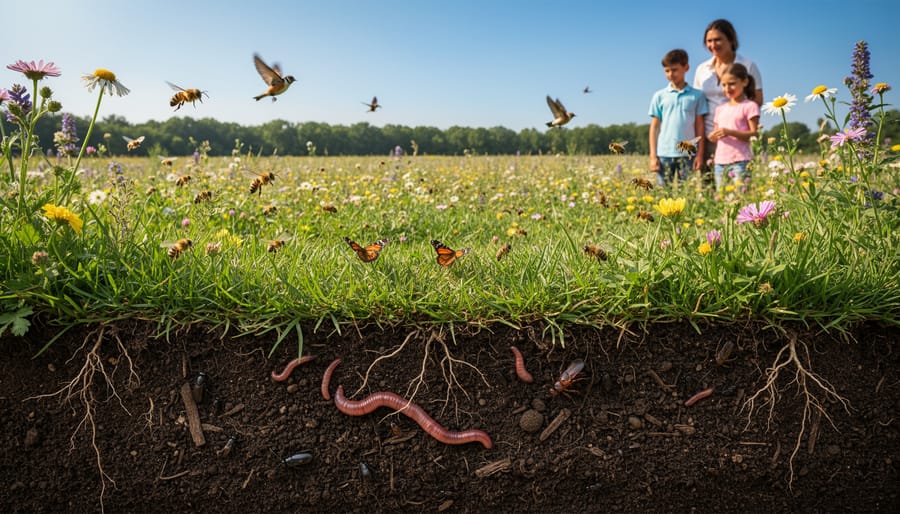
Stewardship becomes practical when a few guiding ideas shape everyday decisions, from how a mine plans its closure to how a community monitors a nearby river. These principles are shared across the sector, and each one can be put into action.
- Long-term thinking: Plan for decades and generations, not just the next budget cycle or project phase.
- Evidence-based decisions: Let monitoring data and sound science guide choices, and be ready to change course when the evidence does.
- Accountability: Make clear who is responsible for outcomes, and follow through on commitments.
- Transparency: Share data, plans, and results openly so people can see for themselves how things are going.
- Shared responsibility: Recognize that industry, governments, communities, and Indigenous peoples all have a role in caring for the land and water.
Taken together, these ideas work best as a system. Long-term thinking sets the direction, and evidence keeps decisions grounded in what is actually happening on the land. Accountability and transparency then build the trust that makes collaboration possible, because people are far more willing to work together when they can see the data and know who stands behind a promise.
Shared responsibility is where the principles really come to life. A resource company might design a reclamation plan, but local communities often know the landscape’s history and what matters most to the people who live there. Indigenous nations bring generations of knowledge about how ecosystems behave over time. Regulators and governments set the rules and check that they are met. When each partner brings its strengths to the table early, decisions tend to be stronger and more lasting.
For readers, the takeaway is encouraging: you don’t need a science degree to apply these ideas. Asking whether a decision looks far enough ahead, whether the evidence is public, and whether the right voices were included is a good place to start.
How Stewardship Works: From Science to Action
Measuring and Monitoring What Matters
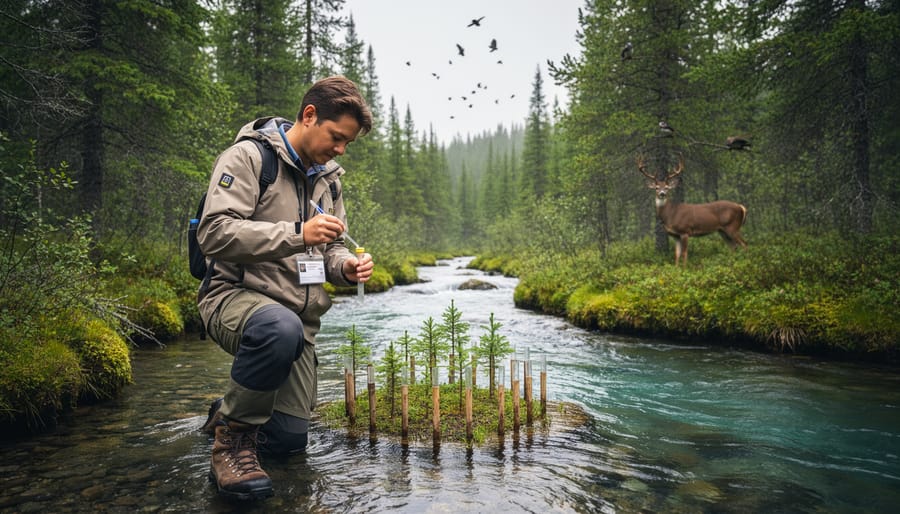
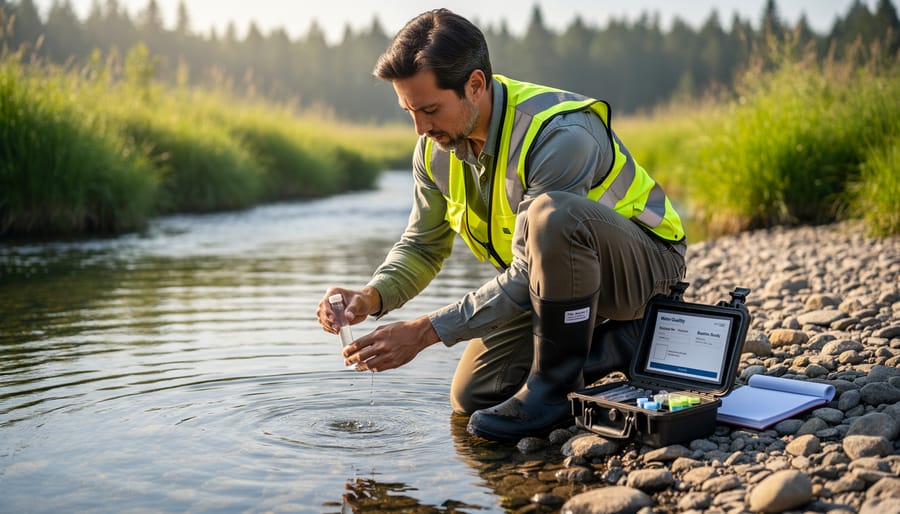
Scientists track environmental health by measuring a few key indicators over time. For air, that might mean sampling particulate matter (tiny airborne particles) and dust near a site. For water, teams check pH, dissolved oxygen, and trace metals in streams and groundwater. Soil tests reveal nutrient levels and any contaminants, while wildlife surveys count species like fish, birds, and small mammals to show whether habitats are holding steady.
The real value comes from consistency. A baseline is a starting snapshot taken before activity begins, and every later reading is compared against it. Because natural conditions shift with seasons and weather, a single measurement says little. Years of steady monitoring show whether a change is a normal swing or a genuine trend.
Sharing results openly turns data into trust. When monitoring reports are published and reviewed with neighbouring communities, people can see the evidence for themselves, ask questions, and help shape what gets measured. That collaborative approach is a hallmark of community stewardship where those who live closest to the land have a real voice in how it is watched over.
Adaptive Management in Practice
Adaptive management is a simple idea: make a decision, watch what happens, and use what you learn to do better next time. Instead of treating a plan as fixed for decades, practitioners treat it as a well-informed starting point that can be refined as evidence comes in.
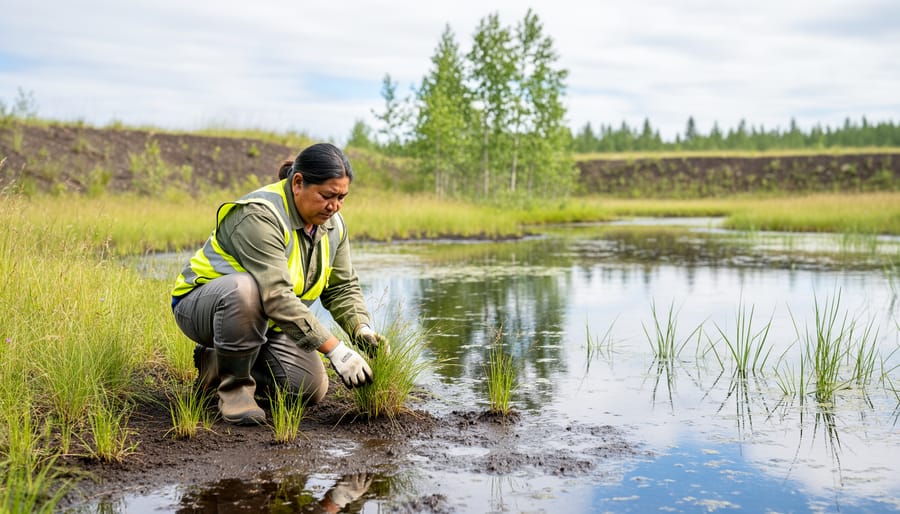
Imagine a team restoring a streambank after land disturbance. They plant native shrubs and set a target for shade and water temperature. Monitoring shows that one planting method struggles on gravelly soil while another thrives. Rather than carrying on with the weaker approach, the team shifts its methods, records the result, and shares the lesson with others.
That willingness to adjust is a strength, not a sign that the original plan failed. Ecosystems are complex, and conditions like climate, wildlife behaviour, and water flow keep changing. Flexibility lets stewards respond to surprises early, before small problems grow.
Adaptive management also works best as a partnership. Field observations from local communities and Indigenous Knowledge holders can reveal changes that instruments alone might miss, making each adjustment better informed.
Stewardship Across Canada’s Natural Resource Sectors
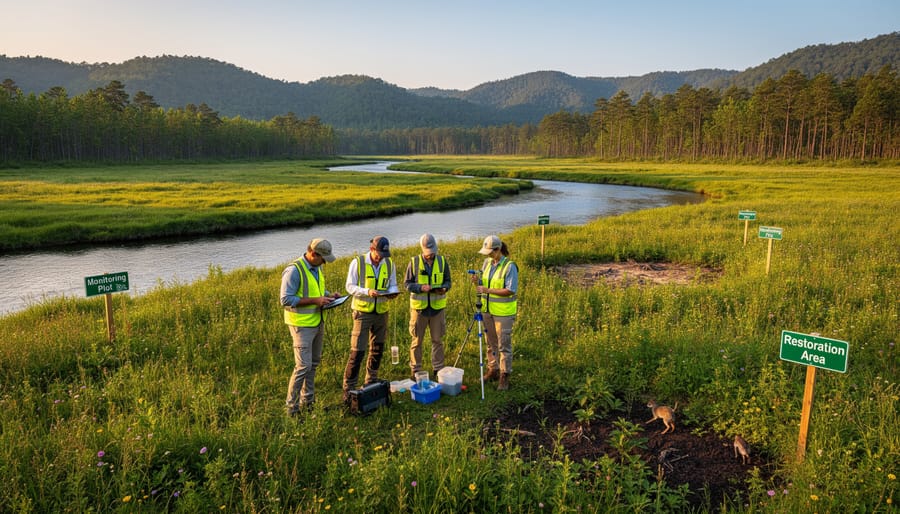
Stewardship shows up differently depending on the sector, but the underlying logic is the same: understand the land, limit harm, and leave it in good shape. Across Canada, that logic is being applied wherever resources are developed.
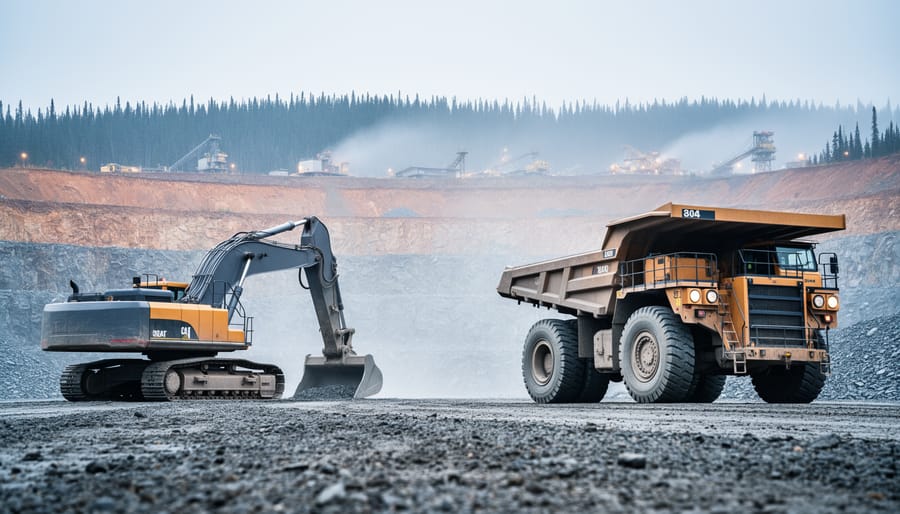
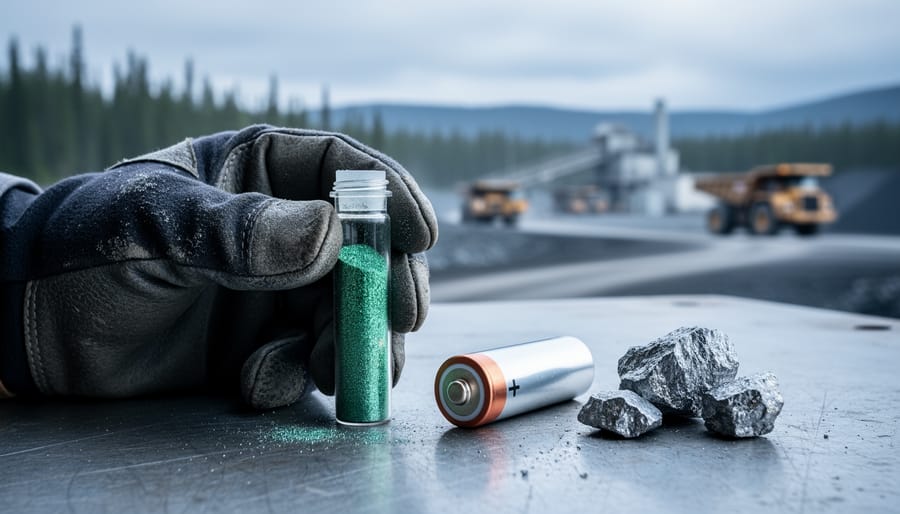
Mining is a good place to see the science at work. Nickel is a key ingredient in many electric vehicle batteries, which ties the metal to Canada’s clean energy transition. That connection raises the bar for how it is produced. Good nickel mining stewardship starts before a shovel hits the ground, with baseline studies of water, soil, and wildlife, and continues through closure planning that decides how a site will be restored decades ahead.
The same thinking applies well beyond mining. Here are a few examples of what stewardship looks like in each sector:
- Mining: Careful tailings management, including engineered storage and ongoing inspection, keeps mine waste stable and out of nearby waterways.
- Mining and energy: Land reclamation replants native species and rebuilds soil so disturbed ground can recover into healthy habitat.
- Energy: Efficiency upgrades and renewable energy projects reduce emissions, while technologies like carbon capture aim to keep greenhouse gases out of the atmosphere.
- Forestry: Sustainable harvest planning and replanting maintain forest cover, biodiversity, and the carbon stored in trees.
- Water management: Watershed monitoring and treatment protect drinking water and aquatic life from the effects of industrial activity.
Each of these practices serves a clear environmental goal, and each depends on measurement. Operators track water quality, report results, and adjust when the data says something isn’t working. That feedback loop is what separates stewardship from good intentions.
It would be too tidy to say the work is finished, though. Legacy sites still need cleanup, and tailings facilities demand vigilance over very long timeframes. Reclaimed land can take years to match the richness of undisturbed ecosystems, and growing demand for battery metals puts real pressure on the pace of development. These are open challenges, not footnotes.
What’s encouraging is the direction of travel. Regulations, community expectations, and the science itself keep raising standards, and companies, governments, and Indigenous nations are increasingly working at the same table. Progress and challenges exist side by side, and honest reporting on both is how trust gets built.
Indigenous Perspectives and Knowledge in Stewardship
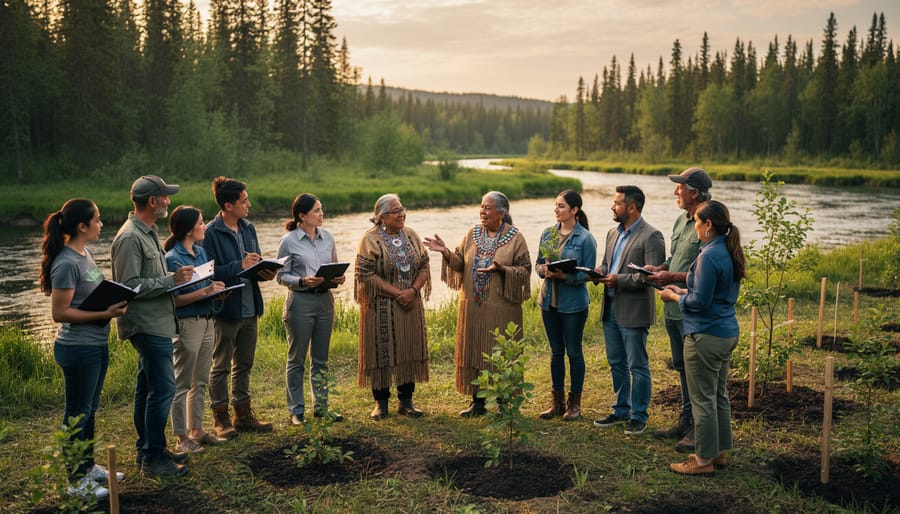
Across what is now Canada, Indigenous nations have cared for land and water for thousands of years. These traditions are not a single, uniform practice. First Nations, Inuit, and Métis peoples each hold distinct knowledge systems shaped by their own territories, languages, laws, and relationships with place. Still, many share common threads: reciprocity, respect, and a responsibility to look after the land for those who come after.
Reciprocity is a good place to start. In many teachings, people are not separate from the environment but part of it, and taking from the land comes with an obligation to give back. Harvesting practices, seasonal rhythms, and protocols for showing gratitude all reflect an understanding that healthy ecosystems depend on balance. Long before formal monitoring programs existed, communities were observing changes in wildlife, water, and weather and adjusting their practices in response.
Today, Indigenous Knowledge is increasingly recognized as a valuable partner to Western science rather than a replacement for it or a footnote to it. Each way of knowing brings different strengths. Long-term, place-based observation passed down through generations can fill gaps that short-term datasets leave open, while scientific tools can add new ways of measuring and sharing findings. Used together, they often give a fuller picture of ecosystem health.
This partnership shows up in practice through co-management, where Indigenous governments and communities share decision-making authority with federal, provincial, or territorial agencies over lands, wildlife, and water. It also shows up in community-led monitoring programs, where local guardians and technicians collect data on their own territories.
Meaningful consultation matters here. It works best when it begins early, respects each nation’s own processes, and treats communities as partners with a say in outcomes rather than as stakeholders to be informed. When that happens, stewardship decisions tend to be better grounded, more trusted, and more likely to last.
Common Questions About Environmental Stewardship
Readers often arrive with the same handful of questions, so here are clear answers to the most common ones.
What is the difference between stewardship and conservation?
Conservation focuses on protecting natural areas and resources, sometimes by limiting use. Stewardship is broader: it accepts that people use land, water, and resources, and asks how to do so responsibly so ecosystems stay healthy over the long term.
Who is responsible for stewardship?
Everyone shares it. Industry, governments, communities, Indigenous nations, scientists, and individual citizens each play a part, from setting rules and monitoring conditions to making everyday choices about energy and water.
Can resource development and stewardship coexist?
They can, and the best projects show how. Careful planning, ongoing monitoring, land reclamation, and open reporting help ensure resources like nickel are produced while air, water, and wildlife are protected. Challenges remain, which is why improvement never really stops.
Why does Indigenous Knowledge matter?
Indigenous Knowledge is built on generations of close observation of local lands and waters, and it is guided by principles of reciprocity and respect. When it is brought into decision-making as an equal partner alongside Western science, the result is often a fuller, more reliable picture of how an ecosystem is changing.
Taking part is easier than many people think. You can attend public consultations on local projects, support community monitoring and clean-up efforts, or simply stay informed about how resources are managed near you. Each of these small steps adds to the collaborative effort that keeps stewardship moving forward.
Stewardship in environmental science comes down to a simple commitment: caring for land, water, and resources today in a way that keeps them healthy for those who come after us. It isn’t the job of one group. Scientists, industry, governments, communities, and Indigenous nations each hold knowledge and responsibility, and the best outcomes happen when those perspectives are brought together rather than kept apart.
What makes stewardship work is its long view. Good data, honest monitoring, and the willingness to adjust course turn good intentions into real results, whether the setting is a mine site, a forest, or a watershed. That is the heart of Environmental Stewardship in Natural Resources: using what we need while protecting what sustains us.
Canada’s resource future is still being written, and there’s room for everyone in that conversation. Keep learning, ask thoughtful questions, and support open, informed dialogue. Progress grows from collaboration, and there is plenty of reason for optimism.